

A woman in her mid-sixties bends down to unload the dishwasher and notices, for the first time, that getting back up takes a small negotiation with her knees. A man reaches into the trunk for a suitcase and feels his lower back register the weight in a way it never used to. Neither of them is hurt. Something has simply quieted, a beat, a margin, that used to be there without being asked for.
The usual advice aimed at that moment treats it as a body problem: join something, sign up, build enough strength to stay independent. That's not wrong. It's just incomplete. For roughly two decades, researchers chasing the earliest signals of cognitive decline have kept landing somewhere unexpected. Not on memory tests first, but on how hard a person can push off the ground with their legs, how firmly they can squeeze something with their hand, how well they can hold still on one foot, how many hours they spend seated in a day. Muscle and memory are different systems. The evidence keeps suggesting they age in step, and that the wiring between them runs both directions.
What follows are six ordinary movements, each one backed by a specific study that put a number on something happening inside the brain.
1. Walk Three Times a Week, Long Enough to Notice It
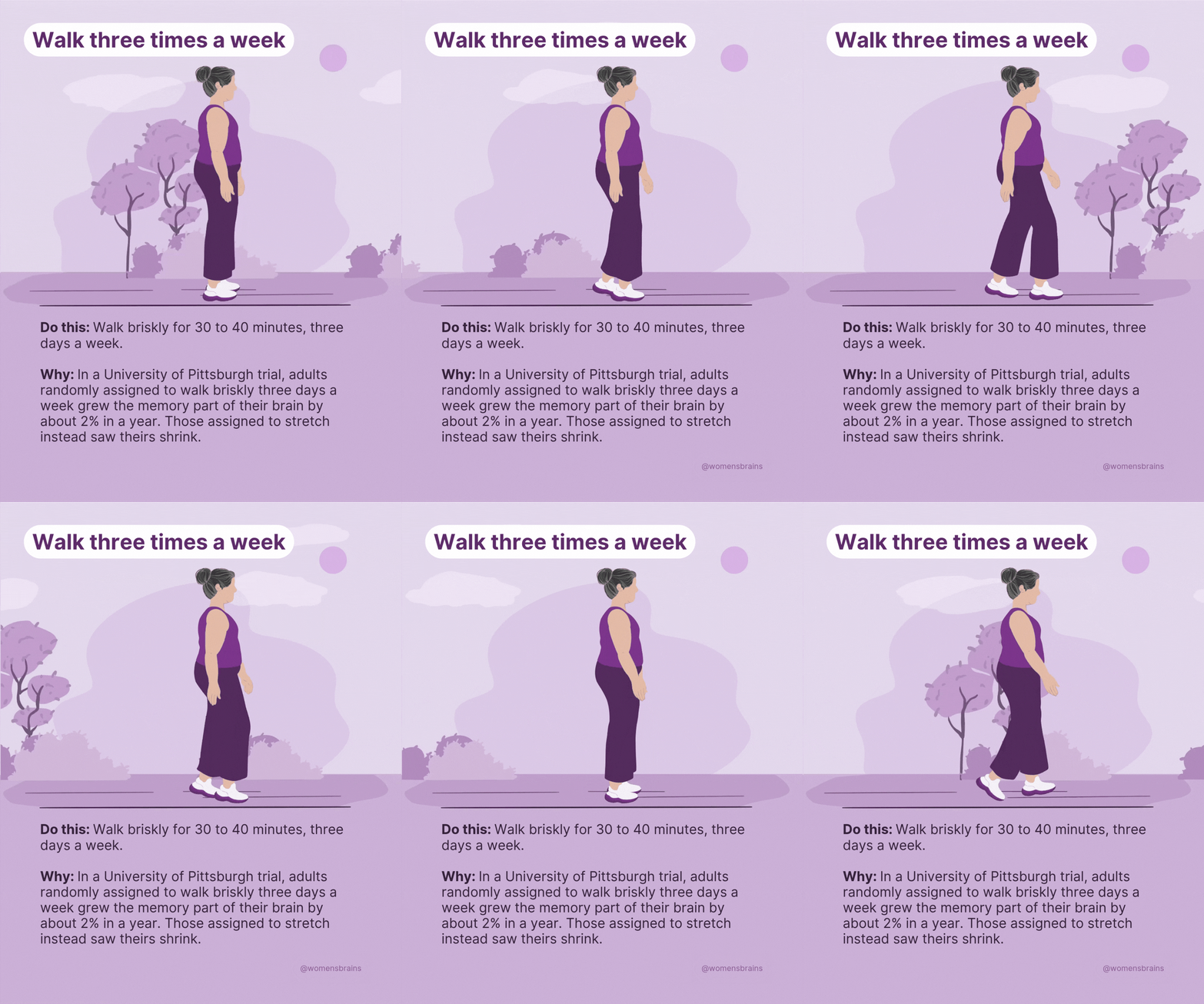
This is the one study on the list that proves cause, not just correlation
Almost everything linking movement and brain health comes from observation: real patterns, but not evidence that one thing caused the other. This study broke that pattern.
Kirk Erickson's team at the University of Pittsburgh ran a genuine randomized trial, published in Proceedings of the National Academy of Sciences in 2011. They recruited 120 sedentary older adults averaging 66 years old, none with dementia, and split them at random. Sixty walked briskly around a track, building up to 40 minutes, three days a week. The other sixty did stretching and toning instead. Every participant had a brain scan at the start, at six months, and again at the year mark.
A year in, the walkers' anterior hippocampus, the structure most responsible for forming new memories and one of the first regions Alzheimer's disease touches, had grown by about 2%. The stretching group's hippocampus had shrunk by roughly 1.4% over the same period, which the researchers noted is close to the ordinary rate of age-related decline. Higher blood levels of BDNF, a protein tied to neuron growth, tracked with the biggest volume gains.
There's a legitimate asterisk here. A follow-up letter published in the same journal pointed out that both groups actually improved on memory testing that year, so the trial's evidence for a memory benefit specifically is weaker than its headline suggests. What held up was the brain-volume difference itself, and that alone is a rare thing to see from something this simple.
2. Practice Standing Up Without Your Hands
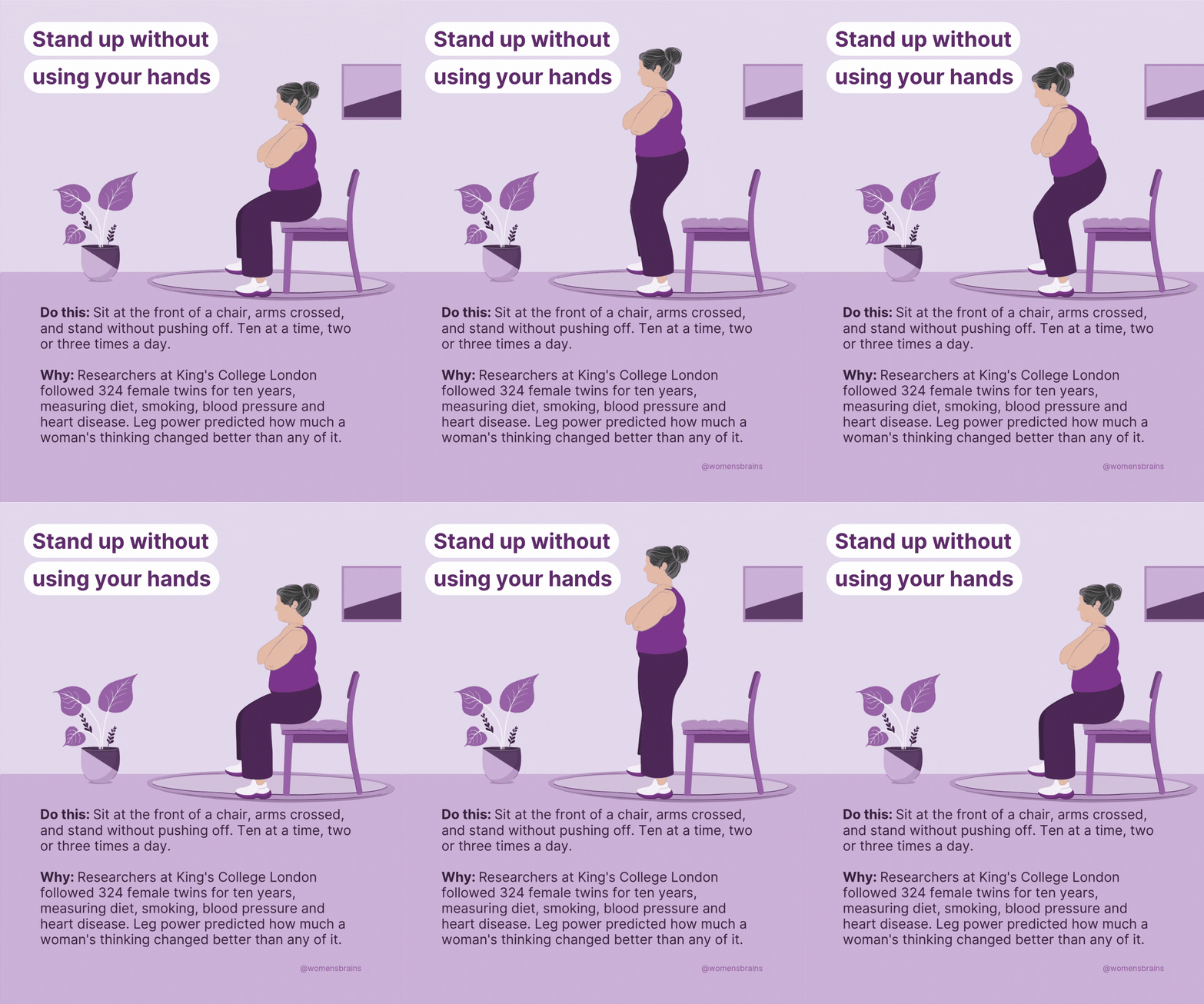
A decade-long twin study found this beats every other lifestyle factor tested
Pay attention to how people rise from a low chair. The rocking forward for momentum. The hand that plants on the armrest before the legs do any work. Somewhere in the fifties that habit tends to move in and stay.
A ten-year study out of King's College London gives a sense of why that matters more than it seems to. Claire Steves and her colleagues followed 324 healthy female twins, ages 43 to 73 at the outset, publishing their results in Gerontology in 2016. They measured leg power at the start of the study, then tested memory and cognitive function both then and a decade later.
Among every other factor the researchers accounted for, including heart disease, diabetes, blood pressure, cholesterol, diet, smoking, drinking, reading ability, and even birthweight, leg power turned out to be the single strongest predictor of how much a person's cognition changed over those ten years.
The twin design is what gives the finding teeth. Identical twins share genetics and much of their childhood environment, so comparing sister to sister removes a lot of the usual noise. The twin with more leg power at baseline held onto sharper thinking a decade later, and had more grey matter on a follow-up scan two years after that, than her genetically identical sister with weaker legs.
Building this back in doesn't require equipment. Sit toward the front edge of a chair, feet flat, arms crossed, and stand without pushing off. Lower back down slowly instead of dropping. Ten repeats is a set; fit in two or three sets somewhere in the day, brushing your teeth or waiting on the microwave, and you've done more leg work than most people over 60 manage in a week.
3. Make the Stairs Your Default
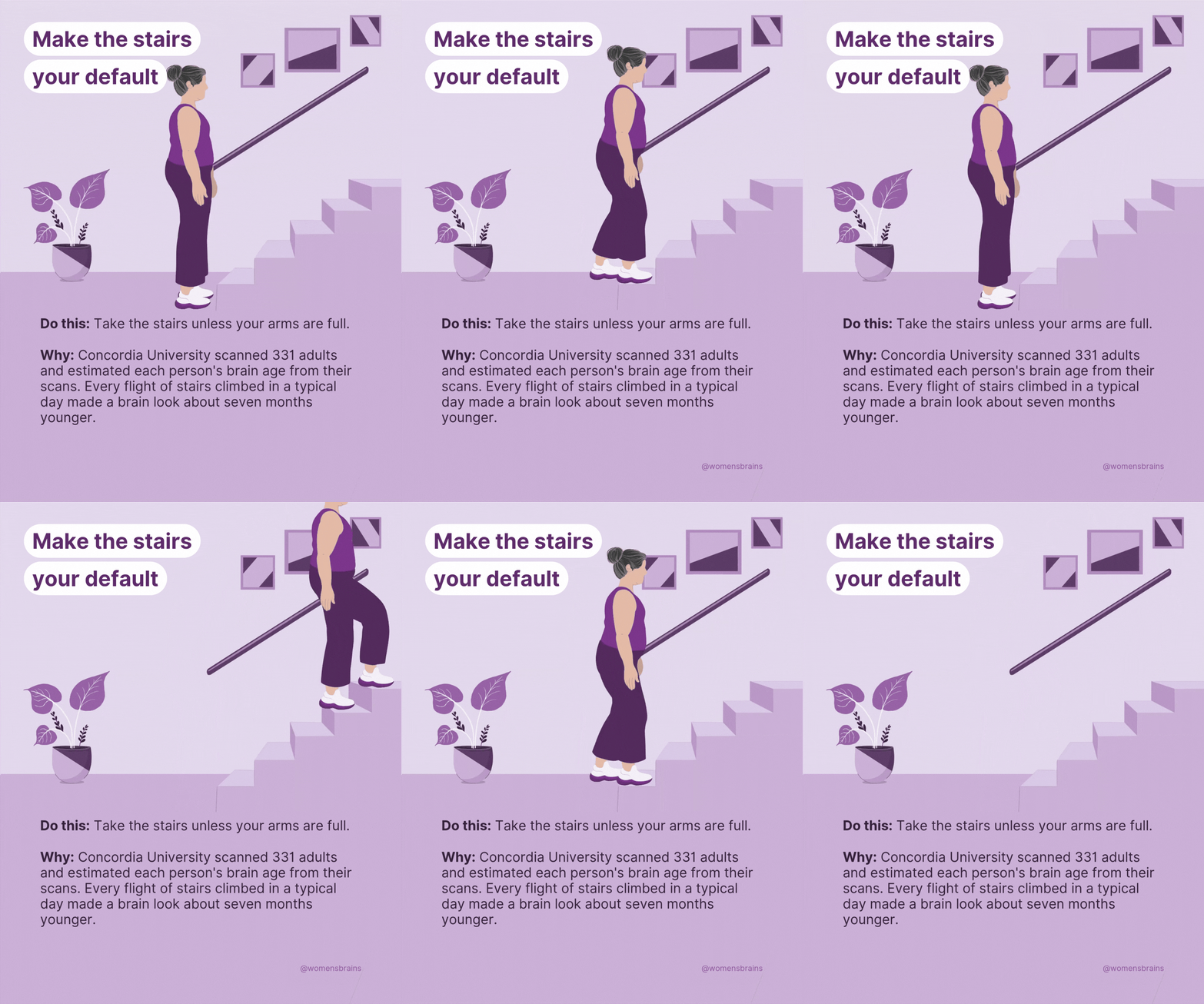
Out of every activity the researchers tested, this was the only one tied to a younger brain
Climbing stairs rarely registers as a workout, which is exactly why it disappears from a week without anyone noticing.
Jason Steffener's team at Concordia University's PERFORM Centre in Montreal scanned 331 healthy adults spanning ages 19 to 79, measuring grey matter to calculate each person's estimated brain age against their real age. They then checked that estimate against years of schooling and self-reported physical activity, publishing the results in Neurobiology of Aging in 2016.
Two things predicted a younger-looking brain, and only two. Every year of education shaved close to a full year off the estimated brain age. Every flight of stairs climbed daily shaved off roughly seven months. Nothing else the researchers asked about moved the number in this group.
Steffener's own explanation leans on frequency rather than intensity: stairs happen again and again through an ordinary day, in short doses, in a way a scheduled workout doesn't replicate. This was a single snapshot in time built on self-report, so it shows a pattern rather than proof. Still, it points to a change that requires exactly one decision. Take the stairs by default, and save the elevator for when your arms are full.
4. Carry the Groceries in One Trip
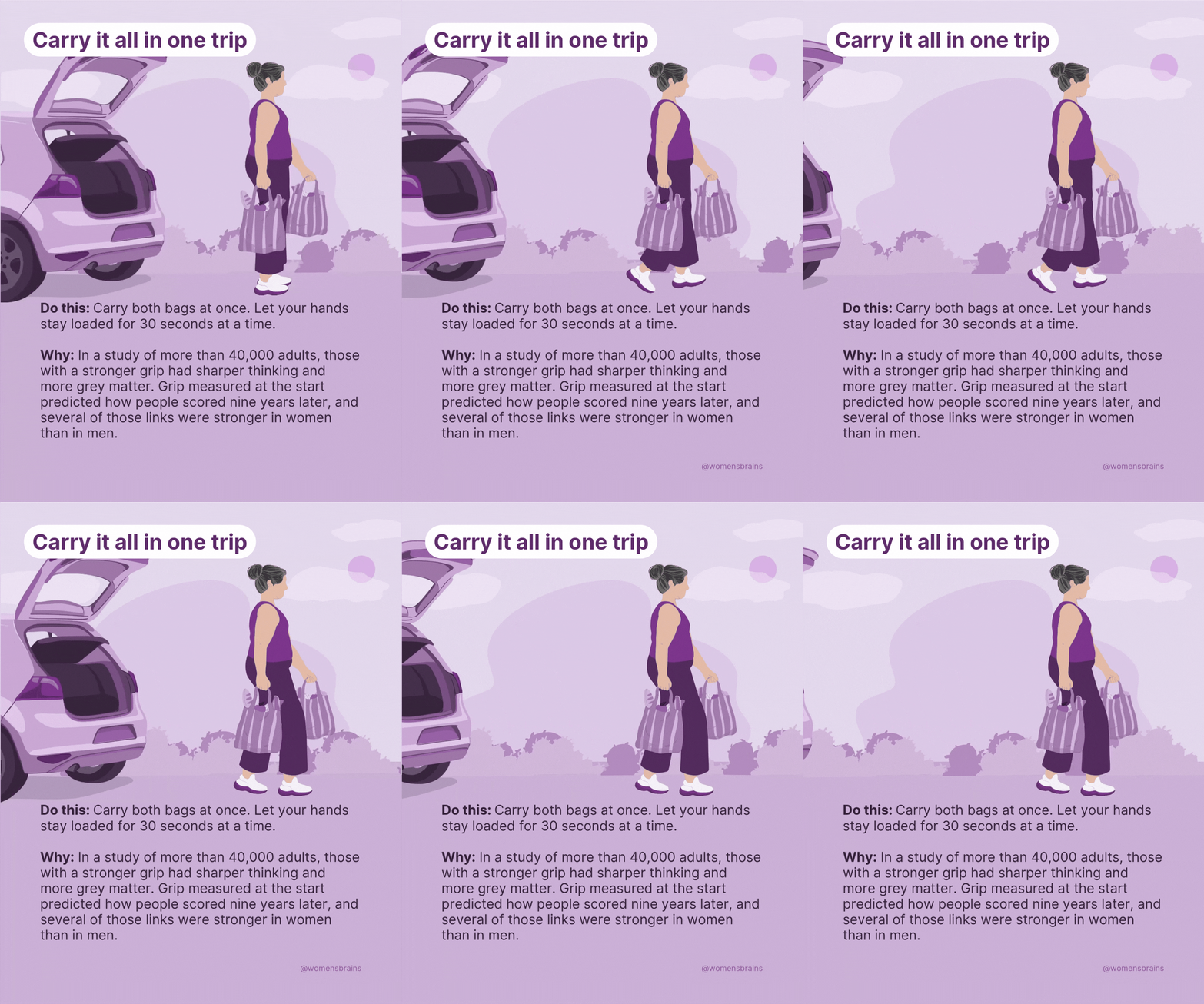
Grip strength tracked with brain volume in over 40,000 people, and the link ran stronger in women
Making two trips from the car feels like the sensible choice. Given twenty years, it's also part of what separates a grip that can still twist off a stubborn jar lid from one that can't.
Grip strength shows up constantly in aging research because it's cheap to measure, hard to fake, and keeps predicting things well beyond the hand itself. Rongtao Jiang and colleagues drew on data from more than 40,000 UK Biobank participants for a study published in BMC Medicine in 2022. A stronger grip lined up with sharper cognitive performance and with more grey matter, especially in subcortical structures and the temporal lobes, the same regions tied to cognitive scores, suggesting brain structure is part of the pathway between the two.
Two additional details are worth keeping. Grip strength measured at the start predicted cognitive performance roughly nine years afterward, while cognition at the start barely predicted future grip, hinting at which way the relationship runs. And several of the associations were more pronounced in women than in men.
At home this means carrying both grocery bags at once, hauling the full laundry basket in one trip, letting your hands stay loaded for thirty seconds at a stretch a few times a week.
5. Get Off the Couch Every Half Hour
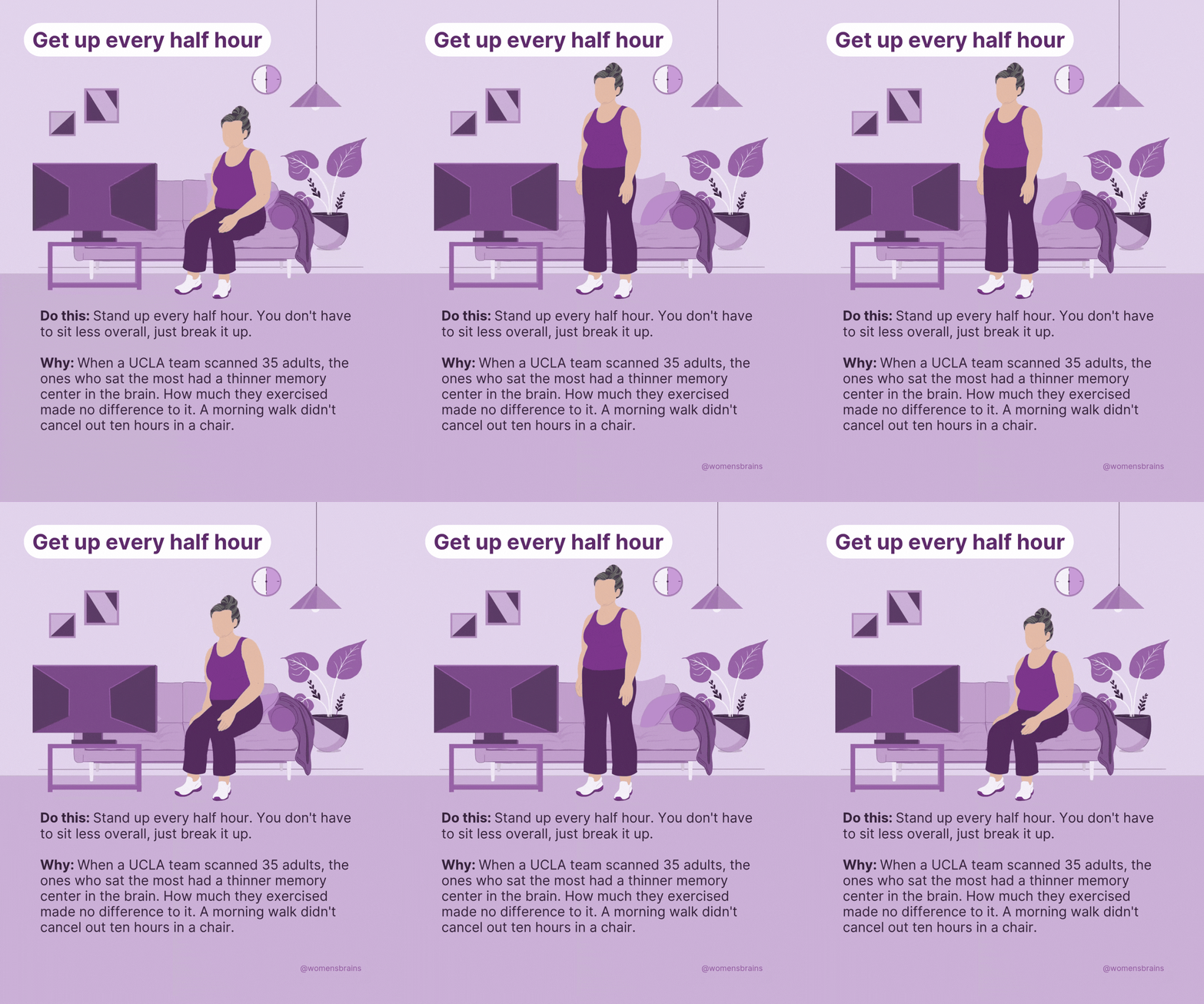
Being active elsewhere in the day didn't offset the hours spent sitting
This one is awkward to read while sitting down, which describes most people reading it.
A UCLA team led by Prabha Siddarth studied 35 adults ages 45 to 75 with no dementia, gathering data on physical activity and average daily hours spent seated, then running high-resolution MRI scans focused on the medial temporal lobe, where new memories take shape. The findings appeared in PLOS ONE in 2018.
More hours of daily sitting correlated with a thinner medial temporal lobe, holding even after adjusting for age, with the parahippocampal region showing the clearest link. Physical activity level, on its own, showed no meaningful relationship with that thickness in this group. A brisk morning walk did not appear to cancel out ten hours in a chair afterward.
This was a small sample, and the authors were careful to call the results preliminary. A broader 2022 systematic review found the same general shape across the wider literature, though: more sedentary time tracking with worse cognitive and brain outcomes.
The fix isn't sitting less overall, which for a lot of jobs and lives isn't realistic. It's interrupting it. Stand while the coffee brews, when a text comes in, between episodes of whatever's on. The break itself seems to be doing the work.
6. Time Yourself Balancing on One Leg
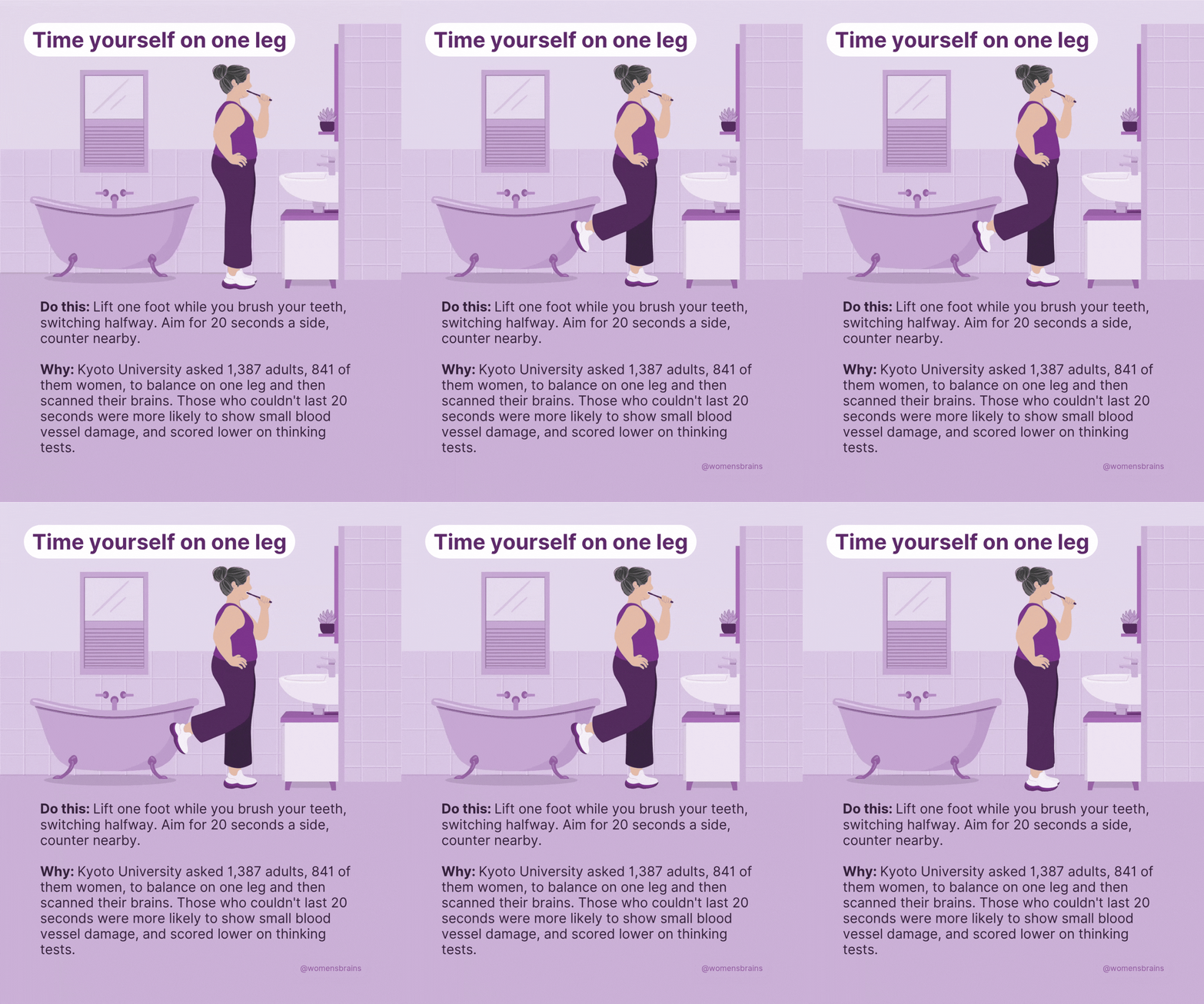
A simple balance test turned out to double as an early read on brain health
Balance stays steady until somewhere in the mid-fifties, then starts sliding faster than most people expect, which is exactly why it tends to surprise them.
Yasuharu Tabara's team at Kyoto University tested 1,387 adults (841 women, 546 men), averaging 67 years old. Each person stood with eyes open, lifted one foot, and tried to hold it for up to 60 seconds, twice, with the better attempt recorded. Everyone also had a brain MRI. Results were published in Stroke in 2015.
People who couldn't hold the position past 20 seconds were more likely to show cerebral small vessel disease on their scans, meaning small infarcts and microbleeds. That inability was tied to lower cognitive scores independently, meaning the connection to thinking held up even once the vessel disease itself was accounted for.
Small vessel disease is common and usually invisible without a scan; most people show some by 60, and it's a real contributor to both cognitive decline and stroke risk. The researchers floated the idea that struggling to balance might be one of its earliest outward signs.
This was a one-time assessment, not a study that followed people forward, and balance also depends on general fitness and strength, so treat it as a signal rather than a verdict. It does make for an easy daily check, though. Standing at the sink already, in good light, with something to grab if needed: lift one foot while you brush, switch partway through. If holding either side for 20 seconds is genuinely hard, that's worth a conversation with your doctor.
One Finding That Isn't a Habit at All
Everything above is something to try this afternoon. This last one is a conversation to have instead.
Bone density and brain health appear connected, more so for women than men.
Researchers with the long-running Rotterdam Study followed 3,651 adults, averaging 72 years old and 58% women, none with dementia at enrollment. Over an average of 11 years, 688 of them, about 19%, went on to develop dementia. The results, published in Neurology in 2023, showed that within the first decade of follow-up, people in the lowest third for total body bone density were 42% more likely to develop dementia than those in the highest third, after adjusting for age, sex, education, illness, medication, and family history.
The researchers were clear that this shows correlation, not cause. Dementia itself can accelerate bone loss through less activity and poorer eating, so some of the relationship may run backward. What the finding adds is that bone loss appears to be underway before a diagnosis arrives, not only after.
A separate research group at UC San Francisco used machine learning on electronic health records to hunt for conditions that show up years ahead of an Alzheimer's diagnosis. When they split the data by sex, osteoporosis predicted risk in women but showed no such pattern in men. A follow-up study in Nature Aging, published in February 2024, traced a genetic link between low bone density and Alzheimer's disease near a gene called MS4A6A, again specific to women.
Mind Over Matter covered this research and what it could mean for future treatment in “Bone Deep: The Surprising Link Between Osteoporosis and Alzheimer's” (Volume 21, page 69).
None of this changes existing guidance on protecting bone health: resistance and balance training, enough calcium, vitamin D, and protein, and moderate alcohol intake. Most of that guidance already overlaps with lower dementia risk on its own. Anyone who's fractured a bone after 40, or is over 65 without a bone density scan on file, has a reasonable case to raise it at their next appointment.
What None of This Promises
Dementia isn't always preventable, and nothing here comes with a guarantee attached.
Age and genetics carry real weight that no amount of walking or grip strength can fully offset. Someone can follow every item on this list and still be diagnosed. That's worth stating outright, because dementia already carries more stigma than it should, and nobody should walk away thinking a diagnosis reflects something they failed to do.
What this research supports is lowering risk, not erasing it.
It's also fair to note where the evidence is thinner. Most of these studies show association rather than proof, several capture a single moment rather than years of tracking, and one involved a small group of people. The walking trial stands apart precisely because it was a true randomized experiment, which is part of why it carries the most weight here.
Across all six, a theme repeats: the movements tied to how the next decade unfolds are unremarkable ones. Rising from a chair without help. Holding a position for twenty seconds. Hauling something heavy up a flight of stairs without stopping.
None of it needs a membership card, a scheduled class, or anyone watching.
Ready to Build a Brain-Healthy Habit?
Knowing this is only step one. What actually reshapes the brain is repetition, doing it long enough that it stops feeling like a choice.
BrainFit® is a free habit tracker from Women's Brain Health Initiative built for exactly that. Organized around the Six Pillars of Brain Health, it helps you set goals, track progress, and stick with habits the evidence supports. Walk, Take the Stairs, Sit Less, Do Squats, and Do Balance Exercises are already built in. It's private, collects no personal data, and nothing sits behind a paywall.
Download BrainFit® free for iOS or Android.
Note: The structure of this piece, ordinary daily movements as early indicators of long-term health, was inspired by “10 Ways to Stay Strong After 60 That Don't Involve a Gym, a Class, or Anyone Watching,” published by Bolde and syndicated on Yahoo Health. The research, findings, and analysis above are original to this piece.