
On the Cover
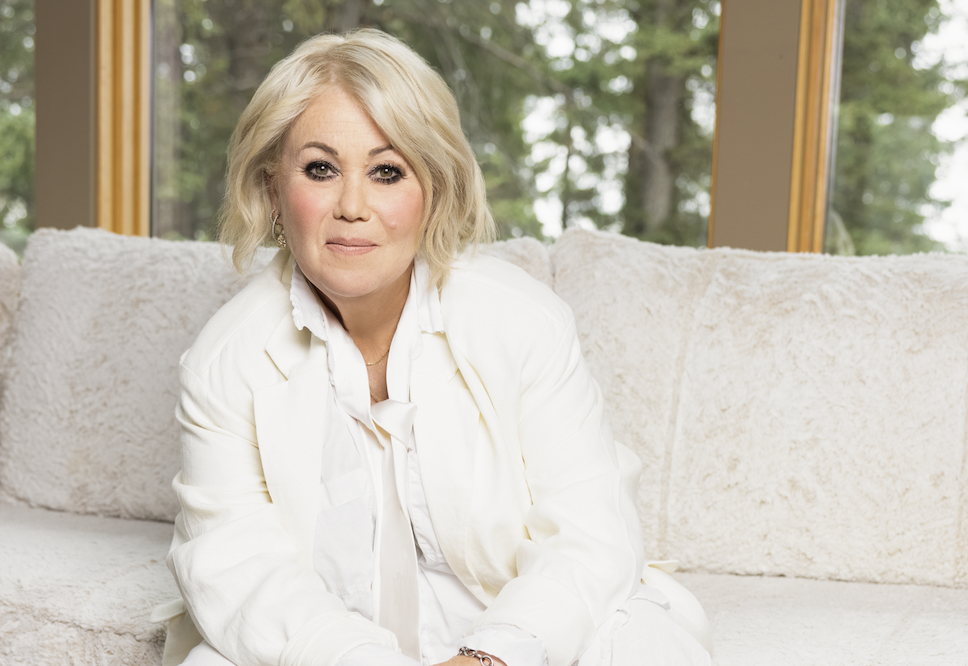
With Jann Arden.
Even when Alzheimer’s disease (AD) robbed Jann Arden’s mother of the ability to understand the function of a toothbrush or remember the names of people close to her, one thing endured: music.
Joan Richards knew thousands and thousands of songs, and they persisted in her memory, despite the profound damage that dementia was doing to her brain.
“She knew music, she could sing the words, and it always absolutely baffled me,” said her daughter.
It was not only because Joan’s daughter is one of Canada’s most celebrated musicians. There is much anecdotal evidence and scientific research documenting the ability of music to reach people coping with dementia.
There are also brain health benefits, as noted in a 2023 literature review published in Brain, Behavior, & Immunity – Health: “Music profoundly impacts emotional states, offering therapeutic benefits in alleviating stress, anxiety, and depression.”
“There’s got to be something there in how those memories are able to reach back into the brain and pull colour and light and emotion forward,” Jann told Mind Over Matter® in an interview from Calgary.
“It is quite frankly nothing short of miraculous what music does.”
Jann had a close-up view, having been a care partner to both her mother and her father, Derrel Richards (who also had AD), in the final years of their lives. She built a cottage for them on her property in southern Alberta. Derrel died in 2015, followed by Joan in 2018.
Along the way, Jann learned hard lessons about the challenges of being a care partner, challenges that she speaks about frankly and publicly.
It changes you in ways you probably don’t even understand until time has passed. Obviously, it’s very traumatizing, really stressful, frustrating. There’s a lot of anxiety when someone you love starts having problems with short-term memory.
She said her mother would become belligerent and angry with her and did not believe she needed help. At times, Joan would suggest Jann had allowed people into the house who were stealing from her. In the beginning, Jann would show anger in response, but through hard experience, she found a better way.
“I learned more about myself in the journey with my mom than I did with any other single task or any other thing, any other relationship, job, career that I’ve undertaken in my life. I’ve learned more about myself – and became a better version of myself – because of the experience of going through Alzheimer’s with my folks.”
She learned to set aside the anger, to be patient, to accept that Joan would ask the same question repeatedly. She stopped challenging her mother’s statements, however untethered to reality they became.
IT ALSO REALLY MAKES YOU UNDERSTAND YOUR OWN ABILITY TO BE EMPATHETIC AND TO ACTUALLY CARE ABOUT SOMEBODY ELSE, EVEN THOUGH THERE DOESN’T SEEM TO BE RECIPROCITY.
Jann kept a journal, which she developed into a book, Feeding My Mother: Comfort and Laughter in The Kitchen as a Daughter Lives with her Mom’s Memory Loss. Acclaimed as both funny and heartbreaking, it became a bestseller.
She recognizes that she had resources that most others do not. She was able to bring in professional, live-in care partners to help support her parents, a substantial expenditure that is out of reach for most people. She said the pandemic exposed cracks in the long-term care system, which will only worsen with an aging population and rising rates of dementia.
“People are already very overworked. It’s going to be a crushing overload of the system.”
Jann has become a strong supporter of the mission of Women’s Brain Health Initiative (WBHI), having spoken at a previous WBHI event, participating in the upcoming Harmony in Care event, and appearing on the cover of Mind Over Matter®.
“It’s probably one of the most important missions that anybody is on. It is a huge, huge foreboding issue. The research that they’re doing is unlocking those doors that we need to look behind,” Jann said of WBHI’s work to protect the brain health of women, care partners, and their families. “We need to find out why music is important. Why are they remembering songs? Why do they know words to the songs? How does that play into this? The research just has to be done.”
Having lost both parents to AD, she is doing everything she can to support her own brain health.
She exercises, watches her diet, gave up drinking while caring for her parents, reads voraciously, and is obviously a creative person.
Asked if her experience as a care partner influenced her music, Jann’s answer is, “Your guess is as good as mine.”
Her latest project is MIXTAPE, her 16th studio album, a selection of some of her favourite songs from the 1990s. It was a decade in which she released her first albums, including Living Under June, and saw some of her biggest hits, such as Insensitive.
“The ’90s was my decade, and I thought that there was just so much great music,” she said.
Jann admits that with such a wealth of choices, it was hard to pick a short list of songs for MIXTAPE. She settled on a collection that includes music from Sia, Seal, TLC, Don Henley, and Chris Isaak, along with her new single, Des’ree’s You Gotta Be.
“I just recorded songs that were stuck in my mind that I love to sing, and oddly, songs that I thought I knew, but when I went to record them, I found I didn’t really know them at all, which was very interesting.”
In May, Jann launches a cross-country MIXTAPE tour, not long after the publication of the 20th edition of Mind Over Matter® magazine, with her on the cover. One of Canada’s best-known faces, making a statement about a disease that touches so many.
“If it helps lift the veil of shame and guilt and kind of secrecy off this disease and makes it more normalized, that’s an important thing.”
Source: Mind Over Matter V20