
Why This Devastating Disease Is More Common Than We Realize.
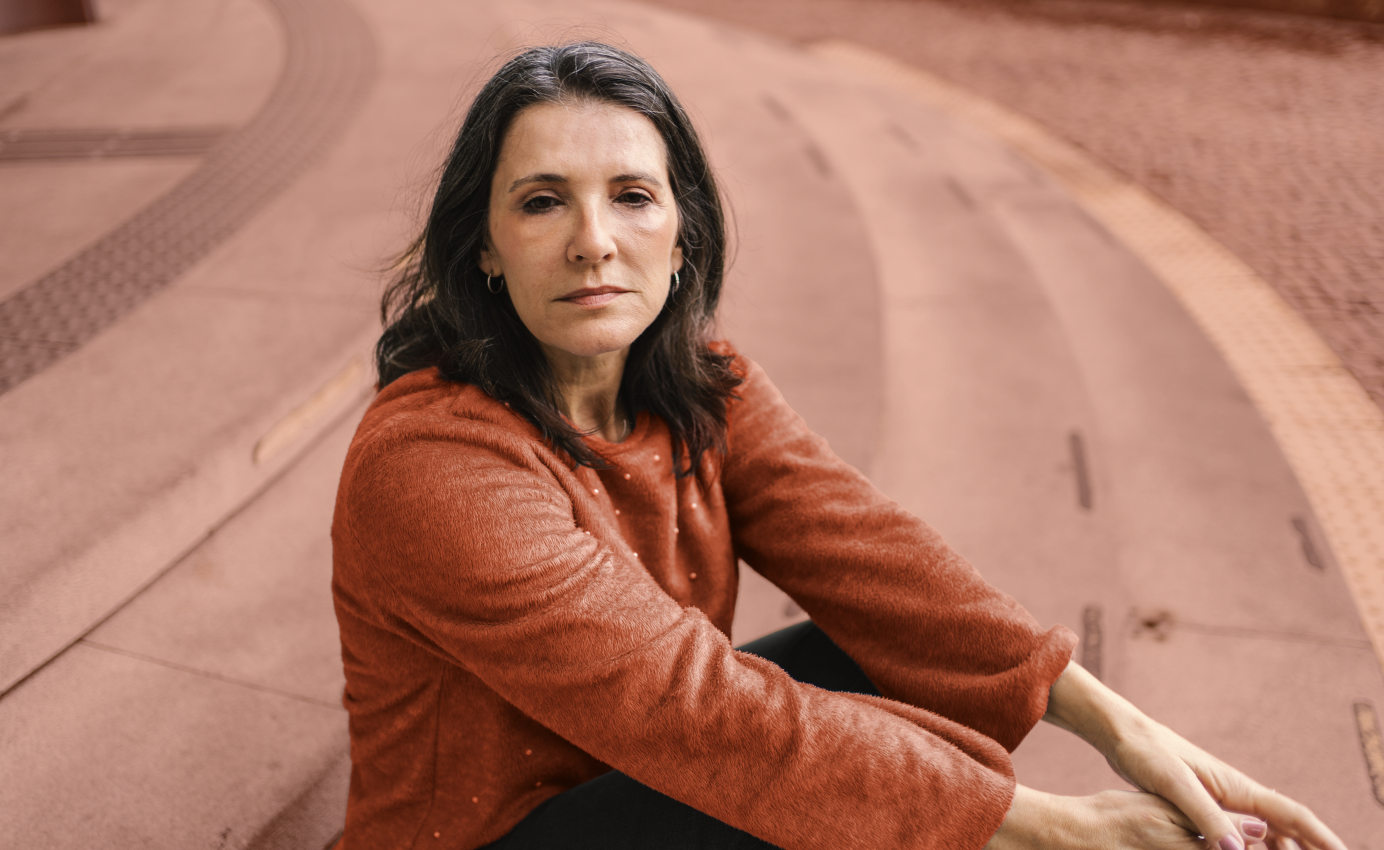
In early 2024, Kaye Francis noticed she was having unusual troubles with speaking and balance. Her family doctor referred her to a neurologist, who suspected she had Parkinson’s disease. The neurologist prescribed levodopa and carbidopa, a drug combination commonly used to alleviate movement problems caused by Parkinson’s.
The drug combination was only somewhat effective, so Kaye wondered if she really had Parkinson’s. She asked her family doctor for a second opinion referral to Dr. Anthony Lang, Director of the Rossy Progressive Supranuclear Palsy Centre at the Krembil Brain Institute, University Health Network in Toronto. Dr. Lang diagnosed Kaye with Progressive Supranuclear Palsy (PSP) in January 2025 at the age of 57.
Kaye generously agreed to share her experiences with Mind Over Matter® to help raise awareness about PSP. This article provides an overview of PSP, including why it’s challenging to diagnose, a promising skin test for aiding diagnosis, clinical trials under investigation, and a caregiver’s perspective.
UNDERSTANDING PSP
PSP is a relatively rare neurodegenerative disease that affects an estimated 30,000 to 40,000 people in the United States and 3,300 to 4,000 in Canada. The average age of onset is between 60 and 80, but there are reports of people developing PSP in their 40s.
The true incidence is much higher as many people are incorrectly diagnosed or undiagnosed.
“Recent brain bank studies from the Mayo Clinic in Arizona show that PSP may be about 50 times more common than previously understood. We have also come to realize that it’s very common for older adults diagnosed with one neurodegenerative disease to have more than one,” continued Dr. Lang.
PSP is considered an atypical Parkinsonism because some symptoms, like issues with balance, stiffness, clumsiness, and slowed movements, overlap with Parkinson’s disease.
Within these broad symptoms, there are notable differences. Unlike Parkinson’s, people with PSP do not tend to experience tremors, and when they fall, they typically fall backwards rather than forwards. PSP also progresses more quickly than Parkinson’s.
DIFFERENT PROTEINS
PSP and Parkinson’s are caused by an abnormal accumulation of different proteins in brain cells:
In a healthy brain, tau protein stabilizes microtubules, routes that carry nutrients and information signals between cells. PSP is caused by a buildup of a specific form of tau protein, called 4-repeat tau, which spreads and forms neurofibrillary tangles that damage neurons. The damage occurs in the brain stem and basal ganglia, the brain areas that control body movements.
In a healthy brain, the protein alpha-synuclein regulates the release of neurotransmitters, including dopamine, which is essential for movement.
In Parkinson’s, a buildup of alpha-synuclein destroys dopamine-producing neurons in the basal ganglia.
GENES & GENETICS
Alterations in the MAPT gene, which provides instructions for making tau protein, are known for increasing the risk of PSP. Scientists continue to hunt for more genes that play a role in PSP disease processes so they can identify potential treatment targets.
Investigators at the Mayo Clinic in Jacksonville, Florida, recently identified close to 5,000 genes involved in PSP disease processes and narrowed the list to 11 that are usually elevated in people with PSP. Reducing the expression of three genes – DDR2, STOM, and KANK2 – reversed PSP disease processes in fruit fly models of PSP. Their study was published in Nature Communications in November 2023.
PSP IS MAINLY CONSIDERED A RANDOM DISEASE THAT IS ONLY GENETICALLY LINKED IN ABOUT 6% OF CASES.
Kaye may have a genetic predisposition to PSP as her mother passed away from the disease in November 2024.
Researchers at Massachusetts General Hospital are conducting an observational study called the CurePSP Genetics Program. They are performing whole genome sequencing on blood samples of people affected by the disease and related conditions to see if they can identify inherited gene mutations that increase the risk of PSP.
SEX-RELATED DIFFERENCES?
Some studies report that the prevalence of PSP is a bit higher in men, while others say the prevalence is about the same for both sexes.
According to one observational study published in Acta Neurological Belgica in February 2021, men with PSP tend to be older at disease onset and experience tremors, have a longer duration of illness, and become wheelchair-dependent sooner than women. By contrast, women are more likely than men to experience apathy, executive dysfunction, and falls within the first year of disease onset. On this topic, Dr. Lang, noted:
Sex-related differences in PSP vary by study. I don’t advise patients on what to expect based on observational studies because PSP begins and progresses differently in each person.
CURRENT DIAGNOSTIC METHODS
Getting a correct diagnosis is one of the biggest challenges for people with PSP.
Like Kaye Francis, many people with PSP are initially misdiagnosed with Parkinson’s, according to the nonprofit organization CurePSP. Another case in point: the singer Linda Ronstadt had trouble singing for years before she was diagnosed with Parkinson’s in 2013. A re-evaluation in 2019 revised her diagnosis to PSP.
“Neurologists diagnose PSP using criteria established by the International Parkinson and Movement Disorder Society (MDS). Patients usually present with some disease features and accumulate others over time”, said Dr. Lang, who served as an expert on the MDS Task Force that established the criteria.
For example, they might present with a speech and language disturbance and then later on develop a progressive freezing of gait, falls, behavioural, cognitive, and mood problems.
Magnetic resonance imaging (MRI) and cerebrospinal fluid (CSF) tests may support the diagnosis. However, these tools are not always available, and lumbar puncture to obtain CSF, which many people aren’t willing to undergo, is currently used exclusively for research studies. Kaye’s MRI results only showed she had a Parkinsonism.
“While MRI on its own is not used to diagnose PSP, imaging showing shrinkage of the midbrain (the “hummingbird sign”), a principal brain area affected by PSP, together with symptoms consistent with a Parkinsonism, suggest that PSP is highly likely,” said Dr. Lang.
SUBTYPES & PROGNOSES
PSP is defined by subtypes that reflect slight variations in how people are affected by the disease. Presently, there are ten recognized subtypes, but the four main ones are:
PSP-Richardson’s Syndrome is the most common subtype, affecting about 70% of cases. Described by the Toronto-based neurologist Dr. J. Clifford Richardson more than 50 years ago, the main symptoms include trouble with balance, falls (especially backwards), difficulty moving the eyes (especially downwards), slow speech, cognitive impairment, and mood disturbances.
PSP-Parkinsonism, the second-most common subtype, involves more one-sided movement issues and slowness compared to Richardson’s. These patients respond better to the Parkinson’s medication levodopa and have fewer issues with thinking, behaviour, balance, and eye movement than those with Richardson’s.
PSP-Progressive Gait Freezing involves trouble walking after taking a step or two, especially after pausing, turning, or entering a doorway. People with this subtype may also struggle with handwriting and rapid speech.
PSP-Speech/Language manifests primarily with very slow, effortful speech and trouble finding words.
There is no one single evolution of the disease, so prognosis varies greatly.
“Patients with Richardson’s Syndrome typically die within five to seven years of disease onset, while those with one of the other three main subtypes may live as long as ten to 15 years,” continued Dr. Lang.
A PROMISING SKIN TEST
“There is an urgent need to improve the diagnostic methods for PSP. Patients and their families need a realistic outlook. Additionally, while there are currently no approved treatments for PSP, patients who are in early disease stages may be eligible for clinical trials testing promising experimental therapies that may prove to change the course of the disease,” said Dr. Lang.
Dr. Gabor Kovacs, Co-Director of the Rossy PSP Centre, and his colleague Dr. Ivan Martinez-Valbuena, recently collaborated with Dr. Lang and his clinical team to develop an inexpensive lab test for detecting PSP. Using a skin biopsy taken from the back of the neck, the test identifies the presence of abnormal 4-repeat tau.
For their first study, published in JAMA Neurology in September 2024, the investigators evaluated their test using skin biopsies from a postmortem group of people who had PSP and then validated their findings with biopsies from living patients, including people with PSP, Parkinson’s, other neurodegenerative diseases, and healthy individuals.
THE SKIN TEST CORRECTLY IDENTIFIED PSP 90% OF THE TIME AND CORRECTLY RULED OUT PARKINSON’S AND OTHER DISEASES 90% OF THE TIME.
The researchers are now validating the test in a larger number of patients, including a study taking place at five PSP centres in Europe and North America.
“The skin test, together with a patient’s clinical symptoms, will give us better information for making a correct diagnosis,” said Dr. Lang. “In the future, skin test results may also inform whether patients are responding to drugs in clinical studies.”
CLINICAL TRIALS
Clinical trials are underway, testing drugs that target different mechanisms of action in PSP disease processes. A promising large study sponsored by the U.S. National Institutes of Health could lead to the first drugs for slowing PSP progression.
The University of California, San Francisco, is leading the study, called the PSP Clinical Trial Platform, which planned to begin recruiting at almost 50 locations in 2026. The Rossy PSP Centre in Toronto will participate as a leading Canadian site.
The study will begin with testing two anti-tau drugs., AADvac1 and AZP2006 (Ezeprogind®). If those prove to be ineffective, the trial will investigate others. The trial is open to people with PSP-Richardson’s who have experienced progressive symptoms for less than five years. Participants have a 75% chance of being randomly assigned to treatment with an active drug rather than a placebo. After one year, all participants can opt to receive an active drug.
Two other notable clinical trials underway for slowing PSP disease progression are:
The phase 2 PROSPER trial of the drug FNP-223 is taking place at 44 international locations. Made by Ferrer Internacional, the oral medication is designed to prevent tau protein from misfolding by inhibiting an enzyme called OGA. The U.S. Food and Drug Administration granted FNP-223 fast-track designation in June 2025 based
on promising results from the ongoing study. This designation will help speed the drug through the approval process if positive results continue.
A Phase 3 trial of Ezeprogind® will take place in Europe soon, given the promising Phase 2 results. The drug aims to clear misfolded tau protein and reduce neuroinflammation. The manufacturer, Alzprotect, is starting with PSP but hopes the drug may one day prove beneficial for other diseases, like Alzheimer’s and Parkinson’s, that share similar impairments in the ability of brain cells to clear clumps of misfolded proteins.
ACCEPTANCE
Forced into an earlier retirement than planned, Linda Ronstadt told CNN’s Anderson Cooper in 2020 that her biggest challenge has been losing autonomy as her motor control declines. Her one word of advice for others diagnosed with PSP was “acceptance.”
Kaye was Manager of the Family Care Office at the University of Toronto for more than 20 years and retired in the spring of 2025 so she could focus on her health. Her top priority is investigating long-term care homes and making advanced care plans so that her care will not be a burden on her husband and their two teenagers. Kaye remains hopeful that research ad-vances will one day find a cure for this devastating disease.
A CAREGIVER’S PERSPECTIVE ON PSP
Connor Running was diagnosed with PSP in August 2018 and passed away in December 2025 at the age of 78. We spoke with his wife, Clare Running, to learn how Connor’s disease affected their daily life and her tips for others caring for people with PSP.
HOW DID CONNOR COME TO BE DIAGNOSED WITH PSP?
I noticed he was dragging a foot while walking. I sent a video to our family doctor, who took one look and said Connor needed to see a neurologist. The neurologist thought Connor might have Parkinson’s and ordered an MRI. The MRI showed a hummingbird pattern of brain degeneration, a telltale sign of PSP, a disease I had never heard of. He referred Connor to Dr. Lang at the Rossy PSP Centre in Toronto.
HOW DID CONNOR’S NEEDS CHANGE OVER TIME?
Connor’s disease progressed slowly over the first seven years, so he was able to sleep in our bedroom upstairs. I was able to transfer him from his chair in the living room to the wheelchair and the stair lift, and then from the wheelchair to the bed. In his last year, his deterioration accelerated, so he slept in a hospital bed in the dining room. I slept on the living room sofa so I would be close by to help him as needed.
DID YOU GET SUFFICIENT SLEEP?
No, but inadequate sleep is one of the most common issues all caregivers face. Connor would groan in the night when he couldn’t roll over or get comfortable. I assumed he was trying to soothe himself, but he can groan for a long time. That’s where my sleep deprivation came in.
HOW DID YOU FEEL ABOUT THE CARE CONNOR RECEIVED?
His care team was wonderful. But after medical appointments, I always felt incredibly sad and lonely. As much as his care team said, “good job,” we left without hope that things would ever improve.
DID YOU ARRANGE FOR AT-HOME CARE?
Yes after Connor qualified for palliative care, he received additional personal support worker (PSW) hours. The palliative care nurse was reachable by phone, and the palliative care doctor was available for visits if required. It’s essential to try to get the same PSW for care – someone who knows your loved one and their routines is a godsend. Otherwise, it takes a lot of time and energy to train new PSWs.
DID HAVING MORE PSW HOURS GIVE YOU ENOUGH TIME TO RUN ERRANDS?
Yes, but it was always on my mind that I had to get back before their time was up. I didn’t go far in case Connor needed me.
DO YOU HAVE ANY WORDS OF WISDOM TO SHARE WITH OTHERS WHO ARE LOOKING AFTER LOVED ONES WITH PSP?
Patience is essential because it’s easy to lose your cool. For example, it was a lot of work to move Connor from his gurney to the commode, which was in the middle of the kitchen floor for convenience. If nothing happened, I’d get him back in his wheelchair, but then he would say he needed to go. I felt like screaming but then reminded myself that none of this was his fault.
I didn’t post online, but I read what other caregivers discussed in the CurePSP Facebook group. While everyone had different experiences, there were some similarities, and it was helpful to learn how others managed challenges.
I learned that even though most of the time Connor was unable to communicate, there were times when his brain worked well. He could still beat me at cards, and he still knew the ins and outs of motor racing, his favourite sport. Our weekends revolved around live events on television, which kept him occupied while I found solace in the garden.
Source: Mind Over Matter 22