
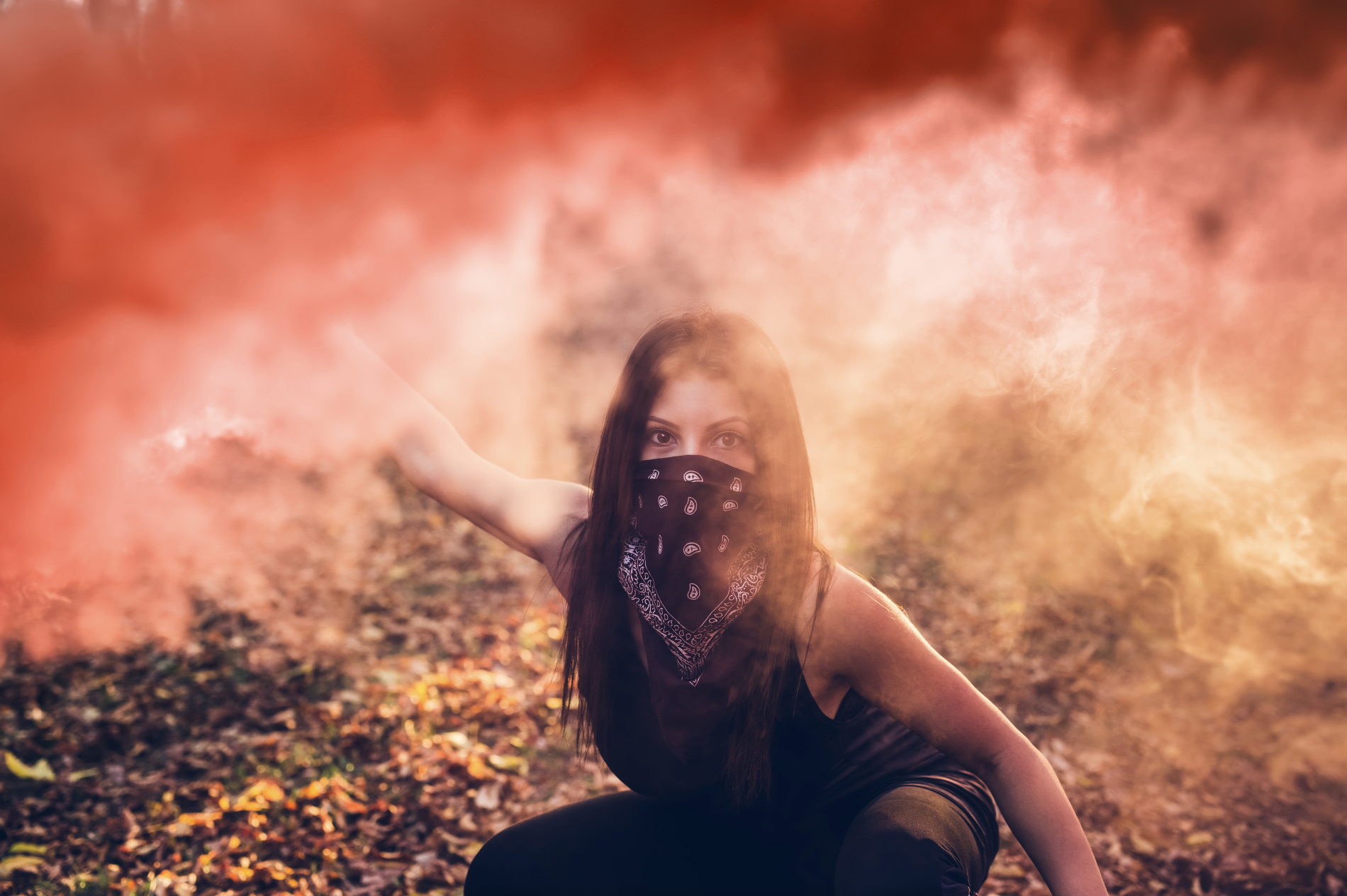
A Greater Impact on Brain Health than Previously Understood.
Wildfires. The word evokes frightening images of bright orange flames and smoke filling the sky as millions of hectares of forests, grasslands, and communities burn, as we recently witnessed in California.
As the destruction caused by wildfires has increased due to climate change, wildfire smoke has become a major source of air pollution both within the burn zones and far beyond.
Wildfire smoke is about ten times as toxic as regular air pollution from burning fossil fuels, and there’s no safe level of exposure, according to Stanford University experts.
Exposure to wildfire smoke is bad for lung and heart health, especially for people living with chronic conditions like asthma, chronic obstructive pulmonary disease, and congestive heart failure. It can also worsen mental health issues, including anxiety, depression, post-traumatic stress disorder and general distress caused by experiencing a natural disaster.
It’s early days for research investigating how wildfire smoke affects brain health, but so far, leading researchers in Canada and the United States have discovered that the impact is more significant than previously understood.
Wildfire smoke exposure is associated with short-term reductions in the ability to pay attention and a longer-term risk of dementia.
Mind Over Matter® spoke with these experts to learn more about their findings. This article also provides helpful information on measures you can take to minimize wildfire smoke exposure.
WHAT’S IN WILDFIRE SMOKE?
TYPICALLY, WE THINK OF WILDFIRE SMOKE AS COMING FROM BURNING FORESTS AND GRASSLANDS. BUT WITH MORE PEOPLE LIVING CLOSER TO FORESTS AND NATURE – THIS IS CALLED THE WILDLAND-URBAN INTERFACE – WILDFIRE SMOKE INCLUDES WHATEVER BURNS, INCLUDING HOMES, ELECTRONICS, AND REFRIGERATORS.
This description comes from Dr. Stephanie Cleland, a research scientist with the Legacy for Airway Health initiative at the
Vancouver Coastal Health Research Institute and assistant professor at Simon Fraser University in Vancouver.
Wildfire smoke is a complex mix of gases like carbon monoxide and sulphur dioxide; volatile organic compounds like toluene and benzene; and particulate matter (PM).
PM consists of solid and liquid droplets suspended in the air. The size of PM particles is measured in microns. Most of the PM in wildfire smoke, about 90%, consists of fine particles that are 2.5 microns in diameter or smaller, known as PM2.5. Each PM2.5 particle is tiny and invisible to the naked eye: about 30 can fit across the width of a human hair.
Compared to larger particles, PM2.5 particles pose the greatest threat to human health because they can travel deep into the lungs, enter the bloodstream, and find their way into the brain, where they cause inflammation and oxidative stress. PM2.5 can also move into the brain through the olfactory nerve in the nose.
“Wildfire PM2.5 contains organic carbon but may also contain worse contaminants like lead or zinc, which might make it more harmful to health than non-wildfire PM2.5, such as emissions from coal-fired power plants, which are mostly sulphates,” said Dr. Joan Casey, an associate professor in the Department of Environmental and Occupational Health Sciences in the University of Washington’s School of Public Health.
CLUES FROM ANIMAL STUDIES
Since conducting human clinical trials of a known toxic substance in humans and evaluating how it affects brain health is challenging, scientists often rely on animal studies.
For example, a team of researchers from the University of New Mexico Health Sciences Center studied the brain health consequences of exposure to wildfire smoke that occurred naturally in California, Arizona, and Washington in 2020. They exposed mice to wildfire smoke-derived PM2.5 for four hours daily for 20 days in a mobile lab far from natural fires.
In their paper, published in Toxicological Sciences in December 2021, the researchers reported they found numerous changes consistent with the development of Alzheimer’s and related dementias, including significant neuroinflammation, a reduction in molecules related to protecting against aging, and an increase in the accumulation of amyloid-beta protein.
SHORT-TERM EFFECT ON ATTENTION
While working on her PhD at the University of North Carolina, Chapel Hill, Dr. Cleland led a study together with Dr. Ana Rappold, a statistician and Branch Chief in the Public Health and Integrated Toxicology Division at the U.S. Environmental Protection Agency (EPA) in North Carolina, and Dr. Sarah Henderson, Scientific Director of Environmental Health Services at BC Centre for Disease Control in Vancouver.
“This study was born out of growing anecdotal reports of brain fog during wildfire smoke events,” said Dr. Cleland.
Our study was one of the first, if not the first, to consider the cognitive effects of wildfire smoke.
For their study, published in Environmental Health Perspectives in June 2022, Dr. Cleland and colleagues evaluated the associations between daily and hourly PM2.5
and wildfire smoke exposure and cognitive function.
They obtained scores from 20 plays of the attention-training game Lost in Migration by Lumosity for more than 10,000 American adults. The mobile app game asks users to identify the lead bird in a moving image of a flock of birds while ignoring surrounding distractions.
Dr. Cleland and colleagues also collected data on daily and hourly PM2.5 and wildfire smoke exposures from multiple sources, including monitoring station observations from the EPA’s Air Quality System database and smoke plume density data from satellite imaging provided by the U.S. National Oceanic and Atmospheric Administration.
Their analysis revealed some surprising findings:
daily and hourly PM2.5 exposure was associated with significant decreases in scores for all game players, especially among those living in the wildfire-impacted western U.S.;
a 10 microgram per cubic metre increase in PM2.5 in the three hours before game play was associated with a 21-point drop in game score. Dr. Cleland said that a 10 microgram per cubic metre increase in PM2.5 is fairly large, similar to the rise between each level on the Canadian Air Quality Health Index (AQHI);
heavy smoke exposure the day before game play was associated with a 117-point decrease in score compared to no smoke exposure, and
PM2.5 exposure over 20 game plays was associated with a 3.7% drop in the final score.
“While these score decreases were not huge given that average scores ranged from 9,000 to 14,000 points, the changes we observed were measurable and significant, confirming that experiencing brain fog after wildfire smoke exposure is likely a real phenomenon,” said Dr. Cleland.
A REDUCED ABILITY TO PAY ATTENTION DUE TO WILDFIRE SMOKE EXPOSURE PALES IN COMPARISON TO MORE IMMEDIATE PROBLEMS LIKE HOSPITALIZATIONS AND MORTALITY, BUT THOSE OUTCOMES AFFECT A SMALLER PROPORTION OF PEOPLE. A DECREASED ABILITY TO PAY ATTENTION AFFECTS EVERYONE EXPOSED AND CAN HAVE A BIG IMPACT ON THE ABILITY TO NAVIGATE DAILY LIFE.
Interestingly, about 70% of game users were women, and the associations between wildfire smoke exposure and scores tended to be stronger for men, especially those exposed to heavier smoke levels.
“We don’t know what led to this gender-related difference, and it’s a complicated question to answer,” said Dr. Cleland. “Men may be more likely to work or be active outdoors, there may be biological differences, or both factors may play a role. At a minimum, identifying at-risk groups could lead to targeted protective measures.”
THE MAIN TAKEAWAY FROM OUR STUDY IS THAT WILDFIRE SMOKE POSES A RISK TO COGNITIVE HEALTH, AS EARLY AS WITHIN HOURS OR DAYS OF EXPOSURE. WE HOPE KNOWING THIS WILL ENCOURAGE MORE PEOPLE TO PROTECT THEMSELVES DURING WILDFIRE SMOKE EVENTS.
In the future, Dr. Cleland plans to conduct new studies examining the relationships between multi-year wildfire smoke exposure, cognitive decline, and the risk of developing chronic neurological conditions.
LONGER-TERM LINK TO DEMENTIA RISK
Dr. Casey was the lead author of the first study to investigate the association between longer-term exposure to wildfire
PM2.5 and the likelihood of a first-time dementia diagnosis. The paper was published in JAMA Neurology in November 2024.
“Previous air pollution studies have found that long-term exposure to PM2.5, a major component of wildfire smoke, is associated with an increase in the incidence of dementia,” said Dr. Casey. “Since wildfire events are intensifying globally, we looked at the relationships between wildfire and non-wildfire PM2.5 and the risk of new-onset dementia diagnoses.”
Dr. Casey and colleagues analyzed ten years of electronic health records for more than 1.2 million members of the healthcare plan provider Kaiser Permanente Southern California. They only included data for people over age 60 who had not been diagnosed with dementia at the beginning of the study.
Next, they used air quality monitoring data, satellite imagery, and machine learning methods to estimate wildfire and non-wildfire PM2.5 exposures. Finally, they determined each individual’s exposure to both types of PM2.5 according to their addresses and compared that information with dementia diagnoses that arose over time.
“We were quite surprised to find a much stronger relationship between wildfire PM2.5 and dementia diagnoses than with non-wildfire PM2.5. Additionally, we found even stronger associations for different subgroups, including non-Hispanic Asian, non-Hispanic Black, and Hispanic members, and those living in high-poverty areas compared to low-poverty areas.”
EVERY INCREASE OF 1 MICROGRAM PER CUBIC METRE IN THE THREE-YEAR AVERAGE EXPOSURE TO WILDFIRE PM2.5 WAS ASSOCIATED WITH AN 18% INCREASE IN THE ODDS OF A DEMENTIA DIAGNOSIS.
By comparison, the same increase in exposure to non-wildfire PM2.5 was only associated with a 1% increase in the odds of a dementia diagnosis.
“It’s important to recognize this was not a causal effect; it was an association. Dementia has multiple causes,” Dr. Casey cautioned. “However, it gives a strong reason to believe long-term exposure to wildfire PM2.5 is worse than other sources of PM2.5 for brain health.”
In terms of sex-related differences, 53% of the study population was female, and there was a stronger association between wildfire PM2.5 and a dementia diagnosis in men.
Mind Over Matter® is the first to ask about sex-related differences in our findings, so I spoke to some sociologists to inquire further.
“They were not surprised with these results since in other qualitative work, they have found women are more likely to take health protective measures during smoke events, such as staying indoors, wearing masks, or running air filters, whereas men are more inclined to go about their usual activities unfazed,” Dr. Casey continued.
Dr. Casey hopes her research will lead to a broader awareness of the importance of paying attention to air quality and checking air quality the same way we check the daily weather forecast before venturing outdoors, especially during wildfire season.
She is planning new studies together with first author Dr. Holly Elser, a resident in the neurology program at the University of Pennsylvania. “Dr. Elser is very interested in learning more about relationships between wildfire PM2.5 and different dementia types, hopefully tying in brain imaging data. If we find a stronger relationship to wildfire smoke for one dementia type compared to others, that could shed light on what’s driving the increased risk.”
KEY TAKEAWAYS
While much research work lies ahead, it’s clear that wildfire smoke is terrible for both short- and long-term brain health.
In an opinion piece published in BC Medical Journal in April 2024, Dr. Henderson and co-authors noted that wildfire smoke gets a lot of attention when PM2.5 concentrations are extreme during large fires but causes much more harm at lower concentrations occurring more frequently.
“If we focus our attention on the extreme events and ignore the more moderate impacts, we miss most of our opportunity to protect health. We should collectively start to manage exposures whenever wildfire smoke is affecting air quality,” they wrote.
PROTECT YOURSELF FROM WILDFIRE SMOKE
01 Confirm air quality is safe before you head outdoors. Check a weather app or refer directly to Canada’s Air Quality Health Index (AQHI) at www.canada.ca/en/environment-climate-change/services/air-quality-health-index.html or the U.S. Air Quality Index (AQI) at www.airnow.gov/aqi/aqi-basics.
Firesmoke.ca, an initiative of the Weather Forecast Research Team at the University of British Columbia, provides an interactive map showing forecasts of hourly and daily PM2.5 wildfire smoke particles across North America.
02 During a wildfire smoke event, stay indoors as much as possible with windows closed. If you must go outdoors, wear an N95 mask. According to the U.S. National Institute for Occupational Safety and Health, a properly fitting N95 mask can filter out 95% of smoke particles.
03 The EPA recommends keeping your home air filtration system up to date and using a portable air cleaner or high-efficiency filter to remove PM2.5from the air during a wildfire smoke event.
Source: Mind Over Matter V20