
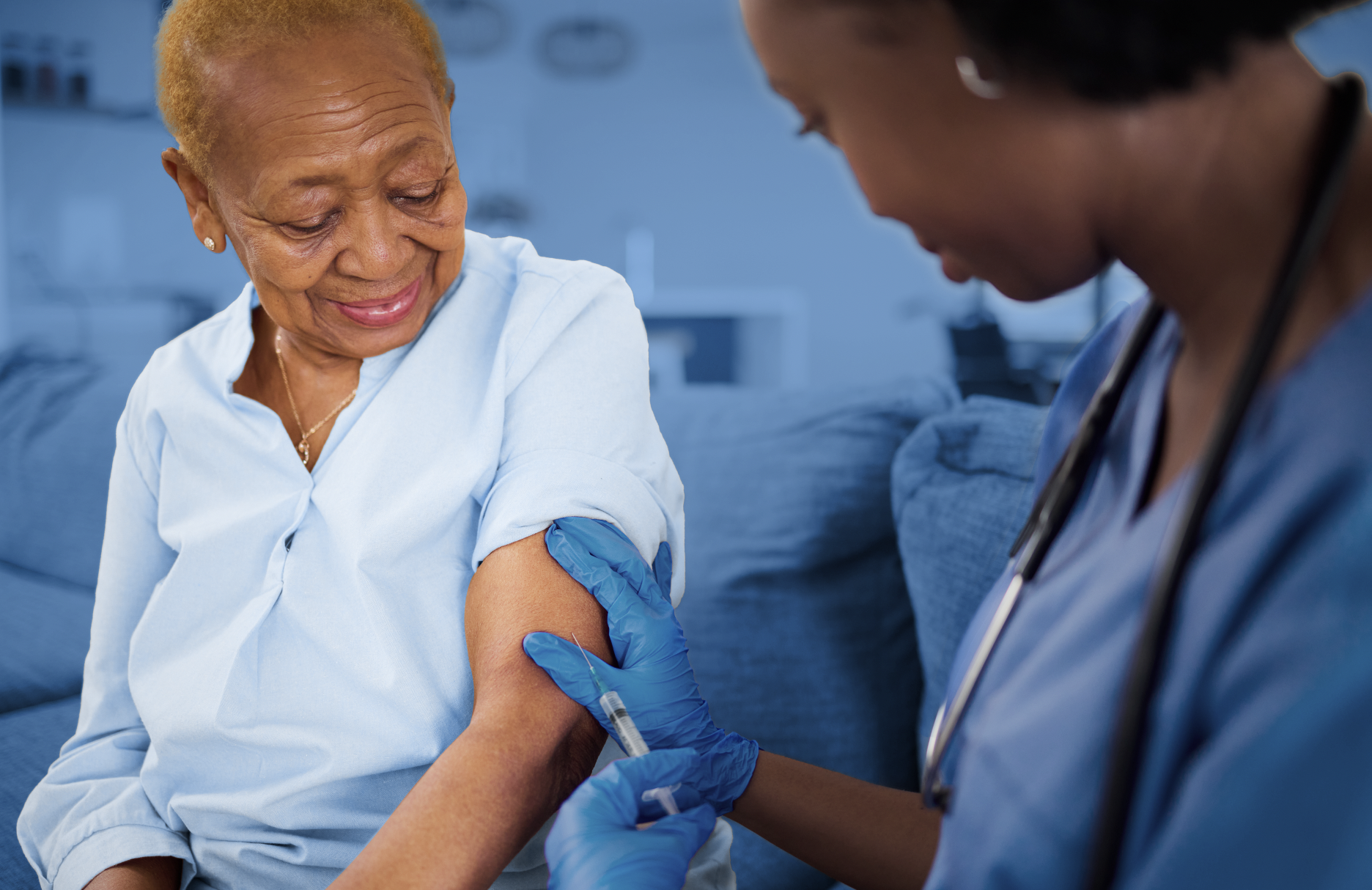
How a Shingles Vaccine May Shield Against Dementia.
A groundbreaking natural experiment from Wales provides compelling evidence that there may be unintentional “bonus effects” of the shingles vaccine that prevent or delay the development of dementia.
WHAT IS SHINGLES?
Shingles is a painful rash with fluid-filled blisters that causes localized nerve damage. The varicella-zoster virus responsible for shingles is the same one that causes chickenpox, typically seen in childhood. Once you have had chickenpox, the virus embeds itself and remains dormant in your nervous system.
Anything that weakens the immune system, including stress or an illness like the flu, can reactivate the virus and cause shingles. The first symptoms to appear are usually pain and itching followed by fluid-filled blisters on one side of the torso, shoulder, or face.
A 2019 article by Drs. Fraidy Maltz and Brooke Fidler in Pharmacy and Therapeutics explains that the virus typically attacks and inflames an area connected to a single spinal nerve. Since spinal nerves do not cross the body’s midline, the characteristic “rash strip” of shingles appears only on one side of the body, making it easy to distinguish from other skin conditions.
Although shingles is more common in adults over 50 years of age, it can occur in childhood.
Symptoms tend to be more severe in adults when compared to children, and in some cases can lead to ongoing pain (known as postherpetic neuralgia), vision loss, skin infections, and problems with the nervous system.
According to the U.S. Centers for Disease Control and Prevention, postherpetic neuralgia is the most common complication and can last for months or years and be debilitating.
SHINGLES VACCINES
Varicella-zoster vaccines were developed to lower the risk of developing shingles and reduce the severity of symptoms and complications if the virus reactivates. According to a 2022 narrative review published in Therapeutic Advances in Vaccines and Immunotherapy, Drs. Catherina Pan, Michelle Lee, and Vinod Nambudiri explain that ZostavaxTM was the first shingles vaccine approved and available in 2006. Zostavax is a live-attenuated shingles vaccine, which means that it uses a weakened form of the varicella-zoster virus to stimulate an immune response.
A second vaccine, ShingrixTM, was released in 2017 and is now the preferred shingles vaccine. Shingrix is a type of adjuvant recombinant subunit vaccine. Drs. Pan, Lee, and Nambudiri explain that unlike Zostavax, Shingrix was developed using genetic engineering and consists of protein subunits of the virus instead of the whole virus.
These subunits are combined with an adjuvant substance to boost the immune system’s production of antibodies. Though both Shingrix and Zostavax offer protective immune responses for about 10 years, the efficacy of Shingrix to reduce the incidence of shingles is 96.6% compared to 51.3% for Zostavax.
POSSIBLE CONNECTIONS BETWEEN SHINGLES & DEMENTIA
According to a 2021 article in Molecular Psychiatry, potential links between herpesviruses and dementias, particularly Alzheimer’s disease (AD), have been explored for decades. Dr. Michael Wainberg and colleagues reviewed results from studies published between 1991 and 2020 showing several links between herpes infections and pathology characteristic to AD, like accumulation of amyloid plaques.
THOUGH THESE STUDIES WERE NOT DESIGNED TO CAPTURE REAL-WORLD CONTEXTUAL FACTORS THAT CONTRIBUTE TO DEMENTIA, FINDINGS SUGGEST THAT INDIVIDUALS WITH HIGHER RISK OF DEMENTIA MAY BENEFIT FROM KEEPING NEUROINFLAMMATION CAUSED BY HERPESVIRUSES AT BAY.
A study published in Nature in 2025 has connected the Zostavax shingles vaccine to dementia prevention using an approach called a natural experiment combined with applied statistical methods from the field of economics.
In an interview with Mind Over Matter®, co-lead author, Dr. Markus Eyting explained that the shingles vaccine was rolled out in a staged manner based on local vaccine guidelines and vaccine availability. In Wales, the first group eligible to receive the
vaccine through a public health program were 79-year-old individuals born between September 2, 1933 and September 1, 1934.
“Wales is a small country in the United Kingdom with a centralized shingles vaccination program,” shared Dr. Eyting. As described in the published article, 98% of adults residing in Wales are registered with a primary care provider, with regular opportunities to learn about public health initiatives like vaccination programs.
The population database known as the Secure Anonymised Information Linkage (SAIL) showed that the probability of receiving the shingles vaccine within one year of becoming eligible was 47.2%. In contrast, those who had their 80th birthday just one week before the vaccination program began were deemed ineligible and had a vaccination rate of just 0.01%.
“The two groups of people born just one week apart were assumed to have similar characteristics, and statistical analyses confirmed that this was the case. We ran some robustness checks, e.g,. to see if they had the same incidence rates of the top ten causes of mortality and disability-adjusted-life-years, and we saw no difference. The single major difference between the two groups was uptake of the Zostavax vaccine,” said Dr. Eyting.
Dr. Eyting and his colleagues scanned the SAIL database over a seven-year period to look at new diagnoses of dementia or the presence of dementia on the death certificate.
DATA SHOWED A REMARKABLE FINDING: THERE WAS A 20% RELATIVE REDUCTION IN THE PROBABILITY OF A NEW DEMENTIA DIAGNOSIS AMONG THOSE WHO RECEIVED THE ZOSTAVAX VACCINE.
Statistical analyses confirmed that the shingles vaccine reduced the probability of a shingles diagnosis similar to the effect sizes seen in clinical trials. This provided support for the effectiveness of the shingles vaccine in a real-world example.
SEX DIFFERENCES IN IMMUNE REPONSES
“Off-target effects of vaccines have often been observed to be far stronger among female than male individuals, with female individuals benefiting more from live-attenuated vaccines in particular,” wrote Dr. Eyting and colleagues in their 2025 publication.
The results showed similar uptake of the shingles vaccine in men and women, but the effect of zoster vaccination on dementia diagnoses was greater among women than men.
A strong body of research shows that dementia, particularly AD, disproportionally affects women when compared to men. Similar mechanisms that lead to greater development of dementia in women compared to men may also be responsible for the stronger protective immune response from the Zostavax vaccine.
Future neuro-biological research should examine the mechanisms behind how anti-viral vaccines reduce the incidence and symptoms of diseases rooted in the nervous system, like dementia and shingles.
DOUBLE-CHECKING THE RESULTS
Data and methods published in the Nature article went through a rigorous peer-review process and lasted a total of 15 months. Beyond the substantive findings showing off-target effects of the shingles vaccine on dementia prevention, important contributions of this research were the natural experiment approach and statistical methods borrowed from the field of economics.
As the methods were relatively new to the study of population health, reviewers wanted to ensure that data were accurate, substantiated, and published with sufficient detail.
“A natural experiment is a powerful method with a good way of analyzing data that is clean and can collect causal evidence. There are lot of cutoffs in medical data because of policies or vaccines that lend well to a natural experiment,” said Dr. Eyting. This method offers promise to look at outcomes as they occur in the real world and may be applied to other diseases and other vaccines in the future.
Dr. Eyting and his colleagues are hopeful that their findings can help scientists to develop an effective vaccine against dementia. “We don’t know the mechanisms for this off-target effect of the shingles vaccine on dementia prevention,” cautioned Dr. Eyting, “but these results can guide researchers on where to look next.”
Source: Mind Over Matter V21