
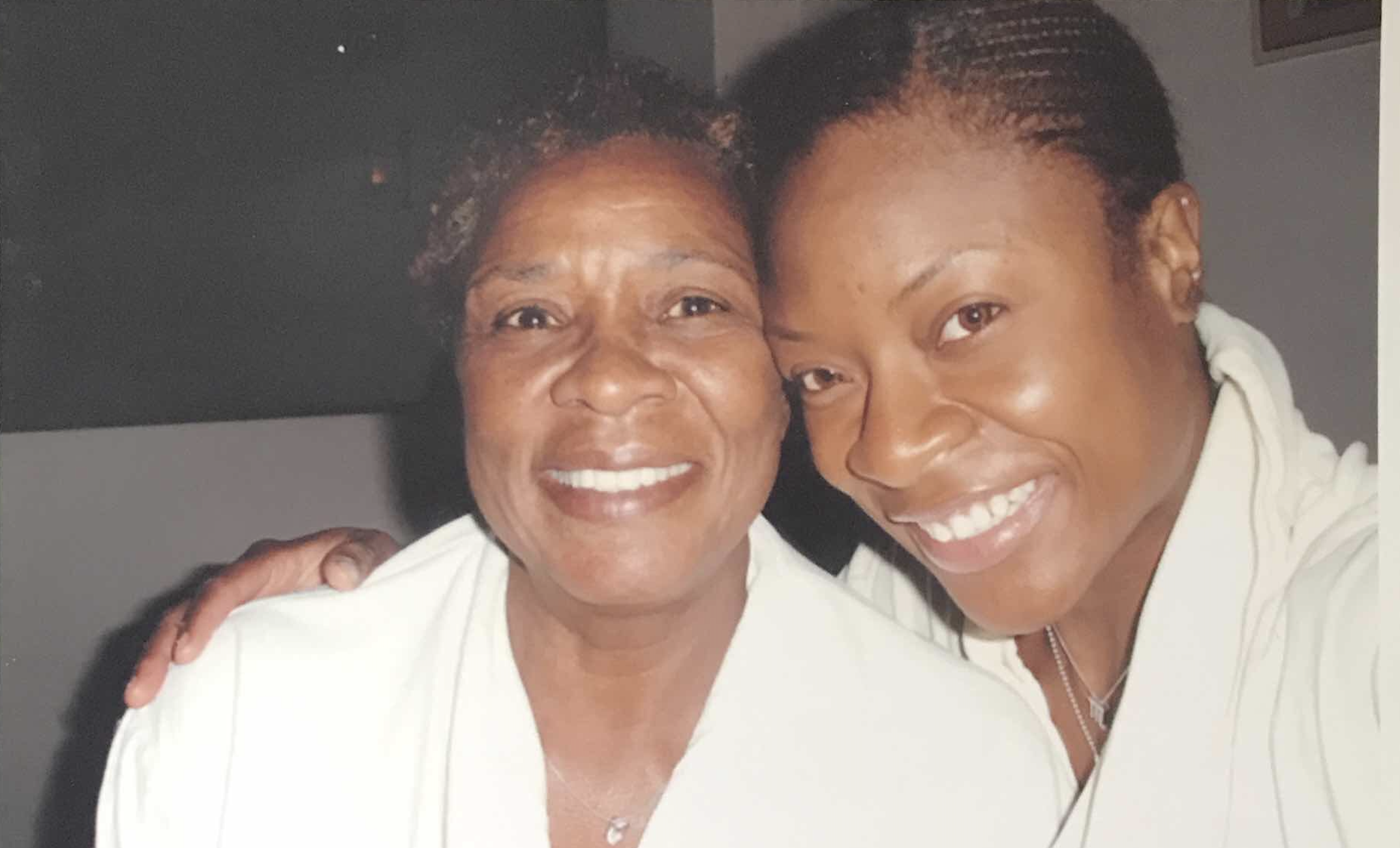
With singer, songwriter, and actress Jully Black.
The changes in Jully Black’s mom started in the kitchen. Throughout her adult life, Agatha Gordon was known for preparing wonderful meals for her large family. But as Agatha reached her mid-70s, Jully started to notice things.
“My first sign with Mom was that her cooking tasted different. Something was going on.” Agatha would speak about the lasagna she had just made, when in fact she had not cooked a lasagna in months. The differences were dramatic enough to prompt her children to act quickly.
“I looked at my older sister and we gave each other kind of a look, and afterwards we said we need to bring her to a memory clinic.” The diagnosis came back that her mother was in the early stages of dementia.
JULLY BLACK, ACCLAIMED AS CANADA’S QUEEN OF R&B SOUL, AN AWARD-WINNING PERFORMER, ENTREPRENEUR, AND ACTIVIST, WAS NOW TAKING ON A NEW ROLE: CAREGIVER.
Agatha Gordon was born in 1936 in the rural Jamaican parish of St. Ann, the second-oldest of seven children. She faced abuse as a child and only had the equivalent of a grade nine education but overcame multiple obstacles to become a much-loved matriarch in a new country.
“She was just a brilliant woman. A woman of faith, who loved life, loved music, loved her kids ... and always supported me in my artistic endeavours,” Jully told Mind Over Matter®.
Agatha gave birth to seven children in Jamaica before divorcing and coming to Canada in 1968 as a domestic worker, where she married again and had two more children, including Jully. Then, her second marriage ended.
“And so she ended up being what she would call a mother who’s single – she didn’t like to call herself a single mom. She decided to put the most important role first,” said Jully. Agatha aspired to be a nurse, but chose to drop out of school to take care of her family, ultimately working at General Motors until retirement.
By the time of the dementia diagnosis, one child, Sharon, had passed away and most of her other children had moved all over North America, leaving Jully and her sister Maria as the lead caregivers for much of the time, along with Sharon’s daughter Chantelle, who was raised by Agatha and lived with her.
“I was blessed to not be afraid of it and decided to approach it head on. I wanted my mom to have an optimal life no matter the condition,” said Jully.
AGATHA WAS PRESCRIBED MEDICATION AND WOULD GO BACK FOR MEMORY TESTING EVERY SIX MONTHS, A PROCESS THAT JULLY FOUND WAS OFTEN NOT CULTURALLY RELEVANT FOR A WOMAN BORN IN RURAL JAMAICA IN 1936.
She would be asked to draw a picture of a beaver and, already self-conscious about her writing, would become nervous and score poorly. While Agatha was still able to do many tasks, she knew she was changing and occasionally would become aggressive and angry. She would forget where she put things and accuse her daughter of moving them. Voices were raised at times.
“The shouting just came from her being frustrated. And then one day, she called me and she said, Ju, what’s happening to me? What’s happening, you know? And I said, Mom, you’re in transition, but you’re 80, Mom. Some of the things that you’re forgetting, even I forget at 40.”
MY MISSION WAS TO PRESERVE HER DIGNITY.
Asked for her advice to others facing the challenges of caring for a loved one with dementia, she said, “It’s OK to grieve for the person that you knew. It’s going to take radical patience. And really love them. Love them in a way you know how to love them, but also in a way they may remember how you love them.”
In Agatha’s case, it meant not trying to speak with her when her favourite soap opera was on TV, but rather just welcoming the opportunity to be present. Over time, Jully learned to go along with whatever her mother was saying, even if the same things were repeated over and over again.
Jully read about how many people with dementia react positively to music and about the benefits of dance therapy, so she got herself certified as a Zumba instructor, and every Sunday she would push back the furniture in her mom’s apartment, and they would dance to the songs of Agatha’s youth. “And she got into it, big time! I think it really helped her.”
Jully took fewer gigs to give her more free time for her mother, which also meant finances were tighter. “So that’s why I had the capacity to be able to be by her side for a couple of years. I still did a gig here and there, but it wasn’t easy. Informal caregivers, you know ...”
THE EXPERIENCE LEFT HER WITH A POWERFUL RESPECT FOR CAREGIVERS AND A BELIEF THAT THEY DESERVE MORE RECOGNITION AND SUPPORT: ‘LET’S CELEBRATE CAREGIVING.
In the end, it was pancreatic cancer, not Alzheimer’s, that ended Agatha Gordon’s life. It meant that the dementia never progressed to the point where she could not recognize loved ones. Jully and family set her up with palliative care in her home, allowing her to pass away in her own bed. She died at the age of 81 in November 2017.
In Agatha’s final years, Jully made a point of recording her mother’s stories, preserving them for her descendants, something she encourages other families to do. “Use your smartphone for a smarter reason. She lived to see her great-granddaughter and great-grandson, and now they’re able to watch all these videos and listen to my mom’s personality and sense of humour. Sometimes I just drop a voice note in the family chat and it’s Mom telling a story. And so it helped with the grieving process. My mom was so jovial, even in her toughest times.”
The recordings also played a central role in Jully’s recent tour, Songs and Stories. Whenever she stepped off stage for a costume change, audiences would hear Agatha’s voice interjecting in a Jamaican accent with observations about life – sometimes profound, sometimes a bit saucy.
“My mom narrated my tour. It was unbelievable!”
Source: Mind Over Matter V21