
Microplastics
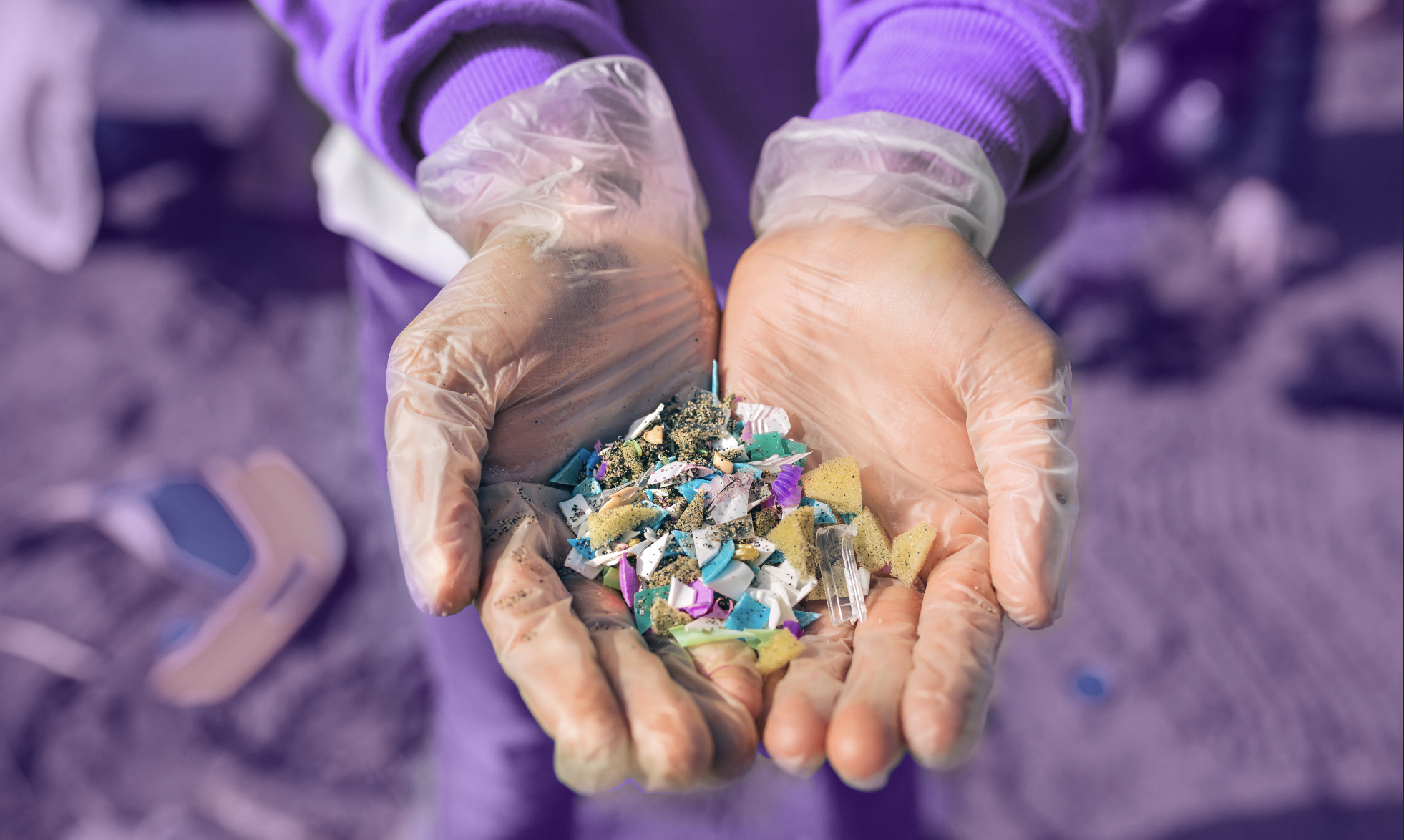
The Latest Brain Research and How to Reduce Your Exposure.
Plastic is everywhere. It’s used to make all kinds of things, like food packaging, water bottles, detergent pods, cutting boards, dental floss, tires, intravenous blood bags, clothing, windows, and in many other applications.
Dr. Richard Thompson, a marine scientist at the University of Plymouth in the United Kingdom, coined the term “microplastics” in 2004 to describe small plastic fragments and fibres he and his research team found on tidal beaches and in marine habitats.
Some microplastics are small by design, produced for use in paints, detergents, and personal care products, like toothpaste, cosmetics, and sunscreen. The majority, however, come from plastic items breaking down into smaller pieces.
MICROPLASTICS DISTRIBUTE THROUGH WATER, WIND, AND FOOD CHAINS. SCIENTISTS HAVE FOUND THEM ON THE OCEAN FLOOR, AT THE TOP OF THE HIGHEST MOUNTAINS, AND IN RIVERS, LAKES, AND SEA ICE.
In 2024, Dr. Thompson and colleagues published a review of 7,000 studies on microplastics in the journal Science. “Microplastics are pervasive in the food we eat, the water we drink and the air we breathe,” they wrote.
It’s no wonder a growing number of studies are finding microplastics in humans, from breast milk, placentas, and testicles to hearts, blood, and lungs. Animal and cell culture studies suggest that microplastics can cause oxidative stress, inflammation, immune dysfunction, abnormal organ development, metabolic disturbances, and cancer.
Studies on the impact of microplastics on human health are emerging. For example, a study published in The New England Journal of Medicine in March 2024 found that people with carotid artery plaque containing microplastics had a 4.5 times higher risk of heart attack, stroke, and death than people with no microplastics in those plaques.
Recently, scientists have discovered microplastics in the brains of animals and humans, raising concerns about the implications for brain health.
Mind Over Matter® reviewed the studies and spoke with leading researchers to put the findings into context. While we can’t avoid microplastics, the experts shared the best ways to reduce microplastic exposure.
MICROPLASTICS IN ANIMAL BRAINS
Dr. Jaime Ross’s crusade against microplastics began in high school. “I hated how spaghetti sauce left an orange ring inside plastic food containers,” she said. “I begged my mom to get glass containers because it was obvious the food was interacting with the plastic.”
Today, Dr. Ross is a neuroscientist and assistant professor in the Department of Biomedical and Pharmaceutical Sciences at the George and Anne Ryan Institute for Neuroscience at the University of Rhode Island. She conducted the first animal study to show that microplastics in drinking water can migrate to the brain. The study was published in the International Journal of Molecular Sciences in August 2023.
Dr. Ross provided a test group of mice with drinking water that contained purified microplastics and a comparison group of mice with regular drinking water. She chose purified microplastics to ensure that the microplastics contained no contaminants that might alter the test results. There were young and old mice in both groups, and they all drank their water as usual.
After three weeks, mice in the microplastics group showed striking behavioural changes. They walked longer distances, spent more time in the open on rearing activities, and stayed in the centre of the testing chambers rather than the typical behaviour of keeping to the edges, compared to the mice in the regular water group.
THESE BEHAVIOURS WERE CONSISTENT WITH COGNITIVE IMPAIRMENT OBSERVED IN MOUSE STUDIES OF BRAIN AGING AND DEMENTIA AND WERE MORE PRONOUNCED IN OLDER MICE THAN IN YOUNGER MICE.
“We were shocked the changes occurred after just three weeks of microplastic exposure, so Lauren Gaspar, my PhD student, re-ran the behavioural tests. The results were the same,” continued Dr. Ross.
They found microplastics in the test group’s urine, feces, and every tissue examined, including liver, kidney, gastrointestinal tract, heart, spleen, lung, and brain tissue. Even more surprising, Ms. Gaspar found a biomarker associated with the early stages of Alzheimer’s disease (AD) and major depressive disorder in the mice exposed to microplastics.
“The microplastics-exposed mice had dramatically lower levels of a protein shown to decline before the onset of neurological diseases, called glial fibrillary acidic protein,” explained Dr. Ross.
Most recently, Dr. Ross and her team found that microplastic-laced drinking water led to marked changes in cognition, memory, and immune markers in mice engineered to carry the APOEe4 gene mutation, the strongest risk factor for developing AD in humans.
Male APOEe4 mice showed signs of apathy and signs of cognitive aging. By comparison, the female APOEe4 mice showed marked memory impairments and reductions in glial fibrillary acidic protein (GFAP).
“These sex-related differences were similar to human symptoms of AD, with men more often presenting with apathy and women with memory loss,” Dr. Ross noted. The study was published online in Environmental Research Communications in August 2025.
“While findings from animal studies do not always translate directly to humans, our results suggest more research is urgently needed to understand how microplastics affect the brain,” Dr. Ross said.
MICROPLASTICS IN HUMAN BRAINS
Canadian science journalist Ziya Tong chronicled her global journey to learn about microplastics and their impact on human health in the 2024 documentary Plastic People: The Hidden Crisis of Microplastics. She interviewed leading researchers who are finding microplastics in human organs, blood, guts, breast milk, and more.
Ms. Tong also met with the first researchers who identified microplastics in human brains. Dr. Emrah Çeltikçi, a neurosurgeon and Dr. Sedat Gündoğdu, a marine biologist at Cukurova University in Turkey, found microplastics in brain cells taken from patients undergoing surgery for brain cancer. Surprisingly, the microplastics were present in cells with and without damage to the blood-brain barrier.
More recently, a team of researchers led by toxicologist
Dr. Matthew Campen, Distinguished and Regents’ Professor at the University of New Mexico’s College of Pharmacy in Albuquerque, made headlines for their findings about microplastics in human brain tissue. They analyzed brain and organ samples from autopsies of people who had passed away in 2016 and 2024.
They found an alarming average of seven grams of microplastics per brain, the equivalent of a disposable plastic spoon or about five water bottle caps. The microplastics were mainly shards of nanoplastics, less than 200 nanometres in size. They were mostly made of polyethylene, the type of plastic used in food packaging and water bottles.
The brain samples contained seven to 30 times more microplastics than the liver and kidney samples. The brain tissues from 2024 contained 50% more microplastics than those from 2016, suggesting a growing trend over time.
ALSO WORRYING WAS THAT THE INVESTIGATORS FOUND UP TO TEN TIMES MORE MICROPLASTICS IN THE BRAIN TISSUE OF PEOPLE WHO HAD A DOCUMENTED DEMENTIA DIAGNOSIS COMPARED TO THOSE WITHOUT A DEMENTIA DIAGNOSIS, WITH NOTABLE DEPOSITS IN IMMUNE CELLS AND CEREBROVASCULAR WALLS.
In their study published in Nature Medicine in February 2025, Dr. Campen and his team noted that it’s impossible to say whether the higher levels of microplastics caused dementia or if dementia processes, such as atrophy of brain tissue, an impaired blood-brain barrier, and poor clearance of foreign matter had allowed higher levels of microplastics to accumulate.
“Having a spoon’s worth of plastic in your brain can’t be good. However, we don’t know yet how microplastics accumulate in the brain or how they interact with brain cells,” said Dr. Nicholas Fabiano, a psychiatry resident at the University of Ottawa who researches connections between physical and mental health.
“We also need a better understanding of the downstream implications. For example, depression and anxiety are rooted in inflammation, and having plastic in your brain can be inflammatory, so there could be links between microplastic exposure and psychiatric disorders.”
REDUCING MICROPLASTIC EXPOSURES
After he shared the University of New Mexico research team’s paper on X (Twitter), so many people asked Dr. Fabiano for information on how to remove microplastics from the human body that he and two colleagues reviewed the latest evidence. They shared their top findings in a paper published in Brain Medicine in March 2025.
They had four recommendations. The first was to stop drinking bottled water. For people who only drink bottled water, this move alone can reduce microplastic ingestion to 4,000 particles from 90,000 particles annually, according to a study by researchers at the University of Victoria, in British Columbia, published in Environmental Science & Technology in June 2019.
Scientists at Columbia University provided a recent update on quantities of microplastics in bottled water. Using advanced imaging to detect nanoplastics more effectively than previous methods, they found that a litre of bottled water contained approximately 240,000 tiny plastic particles, ten to 100 times more than reported in earlier studies.
Around 90% of the plastic particles were nanoplastics. Their study was published in January 2024 in the Proceedings of the National Academy of Sciences. When we spoke with Dr. Ross, she had a refillable glass water bottle on her desk.
Dr. Fabiano and colleagues’ second recommendation also resonated with Dr. Ross – stop heating and storing food in plastic containers and use glass or stainless-steel containers instead. Microwaving food in plastic containers releases up to 4.22 million microplastic and 2.11 billion nanoplastic particles from only one square centimetre of plastic in just three minutes, according to a study published in Environmental Science & Technology in June 2023.
The same study also found that plastic food containers stored at room temperature or in the refrigerator for more than six months can shed significant quantities of microplastics.
Recommendation number three was to consume fewer highly- or ultra-processed foods as manufacturing processes and packaging often lead to higher levels of microplastics than found in unprocessed or minimally processed foods. For example, foods like chicken nuggets contain 30 times more microplastics per gram than chicken breasts.
Finally, while we can’t stop breathing, using a high-efficiency particulate air (HEPA) filter on your furnace and vacuum cleaner can remove up to 99.97% of airborne particles as small as 0.3 microns in diameter, including a significant quantity of microplastics.
IF ADDRESSING ALL OF THESE SOURCES OF MICROPLASTIC EXPOSURES FEELS A BIT OVERWHELMING, YOU’RE NOT ALONE. DR. ROSS ADVISES A GOOD PLACE TO START IS TO THINK ABOUT HOW MANY PLASTICS YOU ENCOUNTER IN A GIVEN DAY AND MAKE CHANGES OVER TIME RATHER THAN TRYING TO TACKLE EVERYTHING AT ONCE.
For example, those fancy “silken” teabags are often made of plastic. A 2019 study published in Environmental Science & Technology by researchers at McGill University in Montreal found that one silken tea bag releases billions of microplastics and nanoplastics into a single cup of tea. “It’s easy to switch to loose tea or use paper teabags,” Dr. Ross advised.
You can also choose clothing made of natural fibres, like cotton, silk, wool, and linen, rather than plastic fibres, such as polyester or nylon. A 2022 study by researchers in China found that tumble drying one kilogram of polyester textiles released about 94,000 microfibres into the outside air in just 15 minutes. Dr. Ross uses liquid and powdered detergents for the dishwasher and washing machine rather than detergent pods.
IT’S IMPOSSIBLE TO AVOID ALL MICROPLASTICS BECAUSE THEY ARE EVERYWHERE. ON THE BRIGHT SIDE, MICROPLASTICS AND NANOPLASTICS HAVE BEEN FOUND IN HUMAN SWEAT, URINE, AND STOOL, SO SOME ARE EXCRETED.
“The best approach overall is to reduce the most significant sources of microplastic intake,” continued Dr. Fabiano.
TAKE ACTION
Dr. Ross agrees with that sentiment, and so does Dr. Thompson. In an interview with the university newsletter Yale Environment 360, he stated that while numerous studies have reported on the accumulation of microplastics in the human body, rather than waiting for conclusive evidence on their impact on human health, we should take action now to reduce our exposure.
“If we’ve already decided it’s harmful, wouldn’t it be better to invest those limited science budgets in exploring where microplastics are and how to eliminate them?”
Source: Mind Over Matter V21